
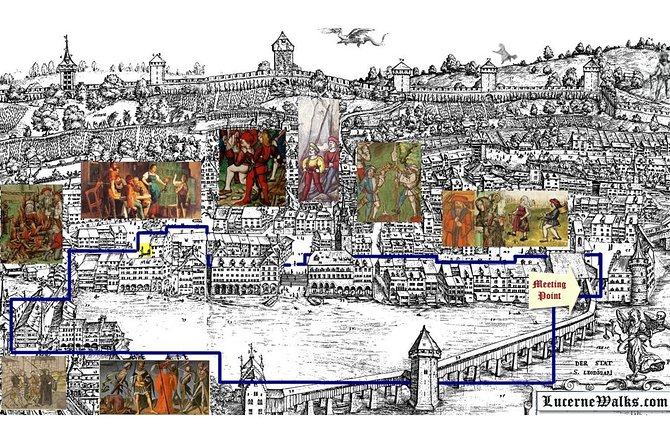
Reviewed · LUCERNE CITY TOURS
1.5-Hour Small-Group Nightwatchman Walk in Medieval Lucerne
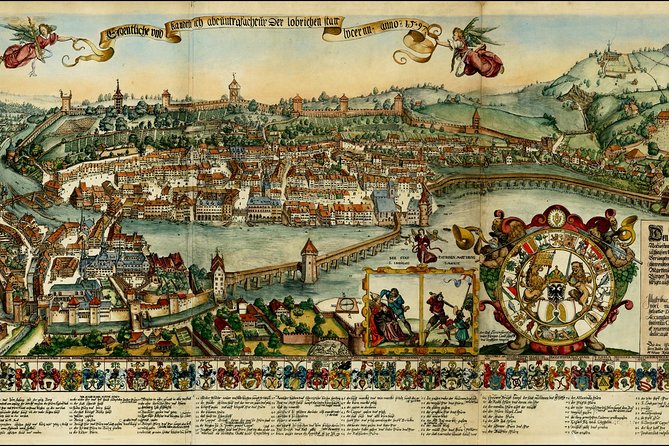
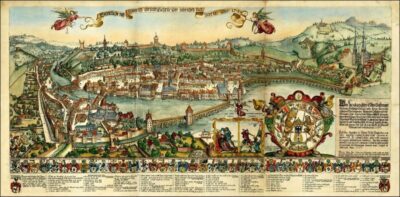
This is interesting because Lucerne’s old town turns into a storybook after dark, and the Nightwatchman guide helps you read the city like a mystery. I love the Martiniplan walkthrough (Lucerne’s first city map, dated 1597) and the way the tour uses visuals like projections and a little show-and-tell. One possible drawback is that the darker side of city life comes up, including torture and punishment themes, so it is not purely cheerful.
The experience is built for a small group and a steady pace through real streets, so you get an overview without needing a museum pass. I also like the guide’s performance style, including the fire-horn moment at the start and the medieval-dressed look, which makes the facts stick. If you are sensitive to gruesome details or you prefer faster, photo-only sightseeing, you might want to mentally brace for some heavy stories.
Key things to know before you go
- Nightwatchman performance with fire-horn start, plus visual aids like projections during key stops
- Martiniplan map (1597) helps you connect old building routes to what you can still see today
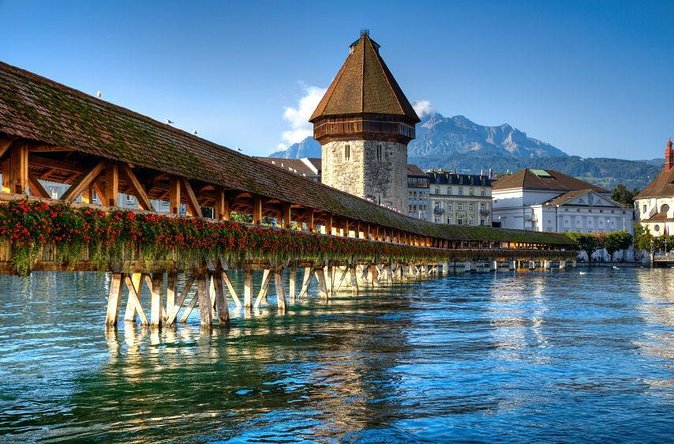
- Chapel Bridge and Water Tower timing, including what was inside the tower in earlier centuries
- Legends in the backstreets, from the Furrengasse ghost stories to the Toggeli
- Real medieval urban clues, like old measures (Lucerne Foot and Elle) and frescoes on house fronts
- A finish with major landmarks, including Spreuerbrücke and a return over Chapel Bridge
Entering medieval Lucerne, one street at a time
Lucerne at night has a special feel. The walking route stays mostly in the historic center, and when streetlights hit medieval stone and painted facades, it is easier to imagine daily life back then. You get context, not just dates, which is the difference between a quick photo stop and an actual understanding of the place.
This is a 1.5-hour walk, run as a small group (up to 15). That matters in Lucerne, because you want your guide close enough to hear, and small groups make it easier to move along narrow lanes without losing the thread of the story. It is also in English, so you can follow everything without playing catch-up.
The tour runs rain, snow, or shine. That is normal for Switzerland, but it does change how comfortable the walk feels. Dress for damp weather and bring a rain layer, because this is still a street-walk, not a warm indoor show.
More Lucerne city tours:
- Lucerne: Private Walking Tour with a Local Guide
★ 4.6 · 450 reviews - Lucerne Walking & Boat Tour: The Best Swiss Experience
★ 4.5 · 417 reviews - Lucerne: Guided Walking Tour with an Official Guide
★ 4.7 · 321 reviews
Meeting the Nightwatchman at Rosengart Platz
You start at Rosengart Platz, 6004 Luzern, and you finish back at the same meeting point. That simple loop is helpful. You do not have to figure out how to get back across the river or down a dark side street on your own.
At the start, the Nightwatchman character signals the beginning with a fire horn, then moves into an invocation-style opening. You also get the sense that you are hearing from someone who lived the job, not someone reading from a pamphlet. It is a small theatrical touch, but it sets the tone and helps the history land.
One thing I appreciate here is the visual support. The guide uses a projector at key points, so you are not only listening while standing in the dark. You get to see maps, projected images, and explanations tied to specific buildings.
The Martiniplan stop, where the city’s layout becomes a clue
The first big moment is at Peterskapelle (Peter’s Chapel). The guide talks about the hard life of a Nightwatchman in the Middle Ages, then brings the Martiniplan onto the screen. This is Lucerne’s first city map, dated 1597, and the tour uses it like a time machine.
You get a detailed look at the map’s routes and then connect them to what you can still recognize today. That connection is one of the tour’s best tricks, because it turns sightseeing into interpretation. Instead of seeing buildings as random landmarks, you start seeing the city’s logic, streets, and boundaries.
From there, you visit the area around St. Peter’s Chapel, described as the town’s first church dating back to the 12th century. The tour also points out the nearby “first private stone house” idea and explains where the expression stone rich comes from. That type of cultural detail is small, but it is exactly what makes a walking history feel real.
Heads up: admission for this stop is listed as not included, so if you want inside access, you may need to pay on site.
Chapel Bridge and the Water Tower, two dates that tell a story
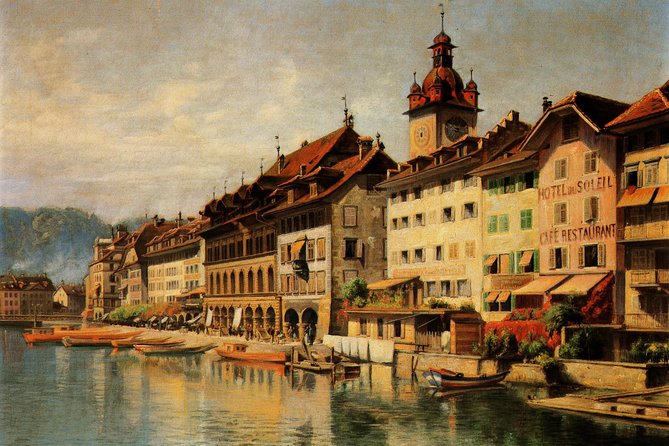
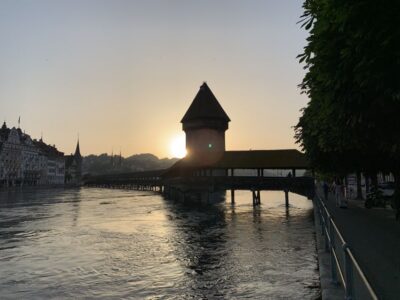
Next you head toward Chapel Bridge. Before you even focus on the famous crossing itself, the guide sets up an important timeline detail: the Water Tower was built in the late 13th century, while Chapel Bridge dates to 1365. That kind of sequencing makes the bridge feel less like a postcard and more like an evolving piece of infrastructure.
You also see projected images of the inside of the Water Tower, with stories that cover torture chambers, dungeons, and even a secret room. This is where the tour leans darkest. It can feel intense, but it also explains why certain buildings mattered to authorities and how control worked in earlier centuries.
The guide then circles back to the Chapel Bridge name, which gives you something to look for beyond the covered-bridge photos. Even if you have seen Chapel Bridge in daylight before, you will notice different details when you understand what the bridge represented to the city.
This stop is listed as free for the walking portion.
A few more Lucerne trips worth comparing
- Lucerne: Walking and Boat Tour with Cheese & Wine Tasting
★ 4.7 · 120 reviews - Exclusive Private Lucerne Walking Tour with Local Guide 3 Hours
★ 5.0 · 80 reviews - Lucerne: Private Walking Tour with a Local Guide
★ 4.2 · 34 reviews - Lucerne: Express Walk with a Local in 60 minutes
★ 4.6 · 21 reviews
Furrengasse and Kapellplatz, legends in the narrow lanes
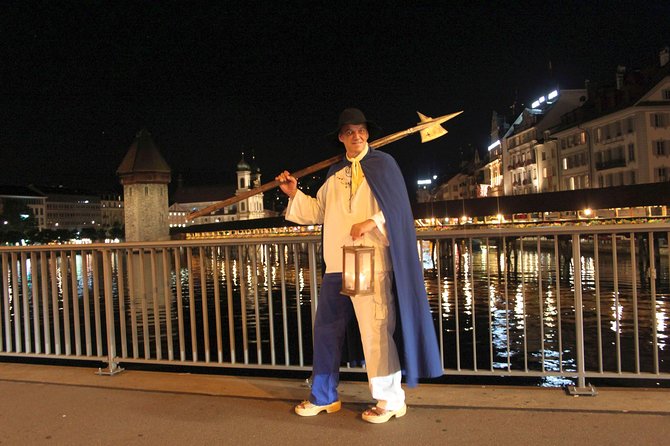
The tour moves into Furrengasse, near Kapellplatz. This is where you start feeling the city as a web of stories. The Nightwatchman talks about life in the Middle Ages in Lucerne and introduces playful-but-creepy folklore, including the Furrengasse ghost and a figure called the Toggeli, described as an incubus and sometimes nicknamed a love robber.
Whether you take these as literal beliefs or simply as how communities explained fear and desire, you get a sense of the social mindset. That matters in a place like Lucerne, where medieval layers are visible on buildings, street corners, and old signage.
This segment is free for admission, so it is mainly about walking and listening.
Kornmarkt, the Renaissance town hall, and the clock without minutes
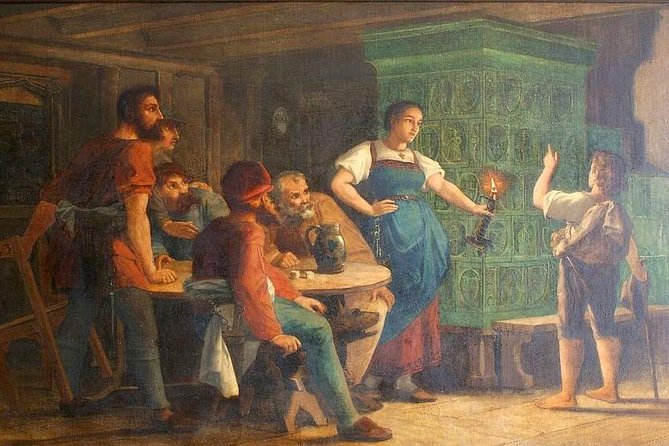
At Kornmarkt, you arrive at Town Hall Square. The guide points out the Renaissance Town Hall and its tower, including the detail of a clock with no minute hand. That specific weirdness is a great hook, because it makes you look closely at something you might otherwise ignore.
You also hear the story of the Giant of Reiden. Then you are shown the Lucerne Foot and Elle, described as official measures used in Old Lucerne. This is a smart move, because it shifts history from legends to everyday systems: trade, construction, rules, and measurements that affected real lives.
If you like history that explains how people ran an economy, this stop hits. It is not only art, it is administration and order written into public spaces.
This stop is free for admission.
Brandgässli and Weinmarkt, murals, riots, and old pharmacy Latin
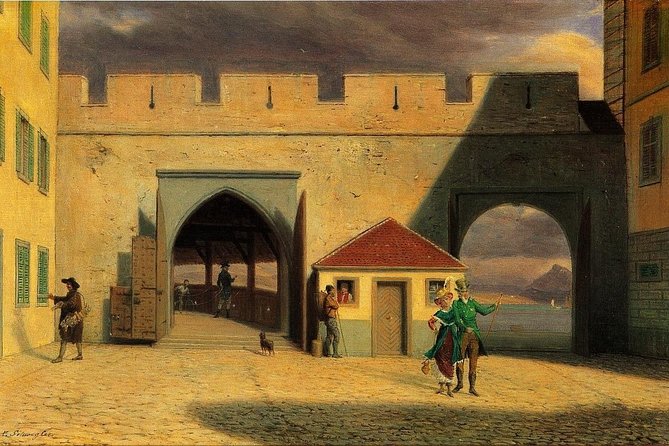
The tour continues through Brandgässli Alley. Here you learn about the Riot of Lucerne, then you move toward what used to be a fish market, now known today as the wine market. It is a nice reminder that city centers often stay in the same footprint, even when the businesses change.
Then comes Weinmarkt, where you see old guest house signs and admire frescoes on the houses. One of the most memorable moments here is at the former pharmacy house of Renward Cysat, where you read a Latin sentence: Amor medicabillis nullis herbis, meaning There is no cure for a broken heart. It sounds poetic, but the point is practical: the city’s buildings hold text that tells you how people thought, sold, and treated problems.
The guide also offers you a glass of the best water Lucerne, with small cups to taste fountain water. That is the kind of detail that makes the tour feel lived-in, not staged. If you get parched during the walk, it also breaks the rhythm in a helpful way.
The tour then talks about reformation and counter reformation, plus the lower wine market and where a pillory once stood. This stop adds a social layer, showing how religion and law shaped public space.
This whole Weinmarkt area is listed as free for admission.
Im Zöpfli and the methods of medieval justice
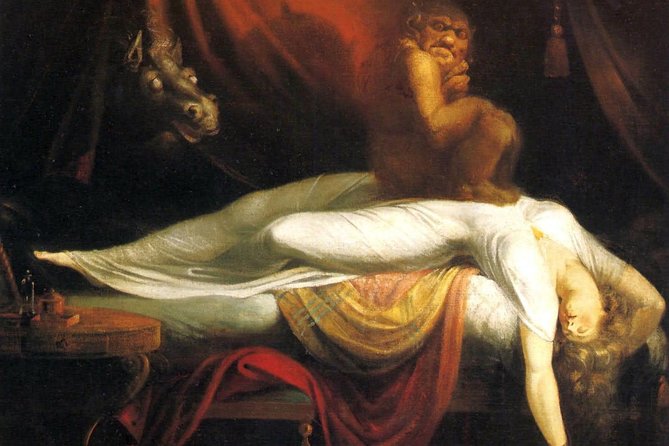
At Im Zöpfli, right by the riverside square, the focus shifts to law and order. The guide uses projected paintings to explain methods of prosecution, interrogation, and corporal punishment used in Middle Age Lucerne.
This is one of the most serious parts of the walk. Even if you are not squeamish, it helps to know that the tour does not sanitize the past. If you prefer light entertainment only, you may want to mentally switch to “historical context” mode here.
Admission at this stop is listed as free.
Along the Reuss, past Spreuerbrücke and parts of Musegg Wall
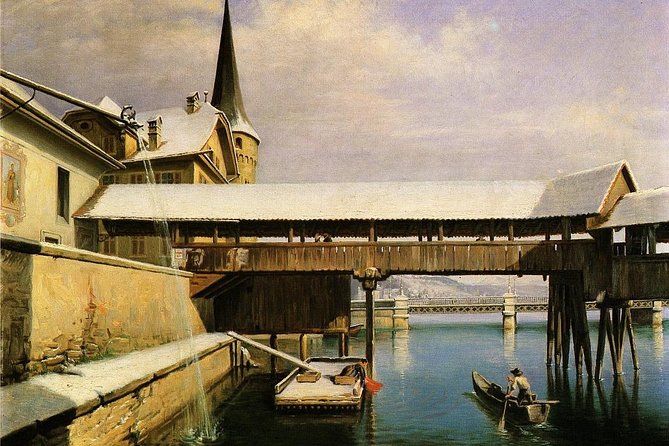
The route then brings you to the river area. You pass Reussbrücke and see Spreuerbrücke (Mill Bridge), plus the Needle Dam and parts of the Musegg Wall.
This is a useful stretch, even though it is not packed with museum-style facts. You get a clearer sense of the city’s boundaries and how water shaped defense, trade, and daily movement. It also gives you a breathing moment between the heavier story stops.
The walking portion here is part of the tour flow, and the admission list notes the overall stop as free.
The medieval pharmacy window at Alte Suidtersche Apotheke
You then reach Alte Suidtersche Apotheke, known for a medieval pharmacy window. The Nightwatchman calls out what makes the window special and adds more context about the house and its location.
This is one of those stops that is easy to miss if you are self-guiding, because the detail matters more than the size of the building. But with the guide pointing at the right elements, you start noticing how pharmacies, symbols, and design were tied to community trust and practical health.
Admission for this stop is listed as not included, so plan for possible on-site payment if you want access beyond street viewing.
Ritterscher Palace and the Dance of Death projections
Next you arrive at Ritterscher Palace Lucerne. Here the tour leans heavily into story, projection, and architectural clues. You learn about “guardian demons,” stop at the legendary house of Lux Ritter, and hear why the first two floors look different from the third one.
You also get the story of Hans von Trient, the unlucky stonemason. Then one of the main art highlights comes in: the seven paintings of the Dance of Death. These are presented via projections on a house wall, with details explained by the guide.
This is a strong stop if you like art that has an edge. The Dance of Death theme is both moral and theatrical, and projecting it onto a real building helps you feel the message rather than just read it on a sign.
Admission for Ritterscher Palace is listed as not included, so treat this stop as a possible extra payment depending on what you choose to see.
Jesuits church and the diagonal logic of Chapel Bridge
As you continue, the guide passes the Church of the Jesuits, described as the first baroque building in Switzerland dating back to 1677. Even though baroque is a later layer than medieval, it helps you understand the city as a timeline, not a single moment frozen in time.
Then you head to the final look at Chapel Bridge. You cross, and the guide explains why the bridge is built diagonally over the river. That detail is the kind of practical answer you appreciate later when you are standing on the bridge thinking, Why is it angled? This time, you know.
The tour ends back at the starting point at Rosengart Platz.
Price, pacing, and what you actually get for $39.54
At $39.54 per person for about 1.5 hours, this is positioned as an informed walk rather than a long attraction visit. The value comes from three things you get together: a cost-controlled small group, a performance-style guide in medieval dress, and lots of visual explanation. Those visuals matter, because Lucerne is easy to admire and hard to interpret if you do not know what to look for.
What can add cost: a few stops have admission not included, specifically Peterskapelle, Alte Suidtersche Apotheke, and Ritterscher Palace. If you plan to enter those sites, budget extra for on-site tickets. If you mainly follow the explanations from the outside, the tour can stay close to the base price.
Pacing is another real part of value. Some people found the walk a bit quick, so if you need slow walking time, ask your guide for a moment at easy turns. The upside is that stops stay frequent, about 10 minutes each, so the story does not lag.
Who this night walk is perfect for, and who might skip it
You will probably enjoy this if you like medieval city life told in a story voice. It also works well if you want a fast overview of major Lucerne anchors like Chapel Bridge, the river bridges, and the Musegg Wall parts, without turning your evening into a checklist.
It is also a good choice for people who enjoy visual learning. Maps like the Martiniplan and art projections like the Dance of Death give you something to focus on besides listening.
You might want another plan if you strongly dislike gory or punishment details. The tour includes projected scenes and discussions around interrogation and corporal punishment. It is historically framed, but it still might feel heavy.
Kids can join too. Children up to twelve years old are free if accompanied by an adult, which makes it easier to bring a family along for a cultural evening.
Should you book the 1.5-hour Nightwatchman walk in Lucerne?
I think this is a strong book for most first-time Lucerne visitors who want more than scenery. The price is reasonable for what you get: a small-group walk, strong use of visuals, and a story that connects old streets to what you can still see now.
Book it if you want to leave Lucerne understanding how the city was laid out, how it measured things, and why certain buildings mattered. Skip it if you hate nighttime walking, cannot handle tense historical topics, or you prefer museum-only experiences with seating and long interiors.
If you do go, wear proper shoes and bring rain protection. This is a night walk through real medieval lanes, and comfort will make the stories feel even better.
FAQ
How long is the Nightwatchman walking tour?
It is about 1 hour 30 minutes.
Where does the tour start and end?
The meeting point is Rosengart Platz, 6004 Luzern, Switzerland. The tour ends back at the same meeting point.
What language is the tour offered in?
The tour is offered in English.
How big is the group?
The tour has a maximum of 15 travelers.
Is the tour weather dependent?
Tours run rain, snow, or shine, so dress appropriately and bring an umbrella or rain coat.
Are admission tickets included?
Admission is not included for some stops, including Peterskapelle, Alte Suidtersche Apotheke, and Ritterscher Palace Lucerne. Other stops are listed as free for admission.
Recently reviewed around Lucerne
- Zurich: Day trip to Lucerne and Bürgenstock★ 3.7 · 12 reviews
- Zurich: Adventure to Lucerne & Pilatus Gold or Silver tour★ 4.8 · 8 reviews
- Private Transfer: Lucerne to Zurich Airport ZRH by Business Car★ 5.0 · 11 reviews
- Private Transfer: Lucerne to Zurich Airport ZRH by Luxury Van★ 4.5 · 6 reviews
- Weggis Vitznau Foxtrail Helios★ 4.5 · 8 reviews
- Natural Wonders of Switzerland from Lucerne (1 Day Private Tour)★ 5.0 · 21 reviews
- Touristic highlights of Lucerne on a Private half day tour with a local★ 4.0 · 5 reviews
- The Lives and Legends of Lucerne: A Self-Guided Audio Tour★ 5.0 · 6 reviews
Lucerne City Tours, side by side.
Lucerne Walking & Boat Tour: The Best Swiss Experience
Read our review →

Walking and Boat Tour with Cheese & Wine Tasting
Read our review →
Lists this tour appears in