
Reviewed · SELF-GUIDED AUDIO TOURS
Zurich in the Mirror of the Past: Self-Guided Audio Tour
Zurich has a way of acting like a mirror, showing you the old city and the newer one at the same time. This self-guided audio tour is interesting because it connects the landmark Zurich people photograph with the human stories, good and bad, that used to play out right on these streets. You get a full 2 to 2.5 hour walk, paced by you, with an English narration by a professional speaker.
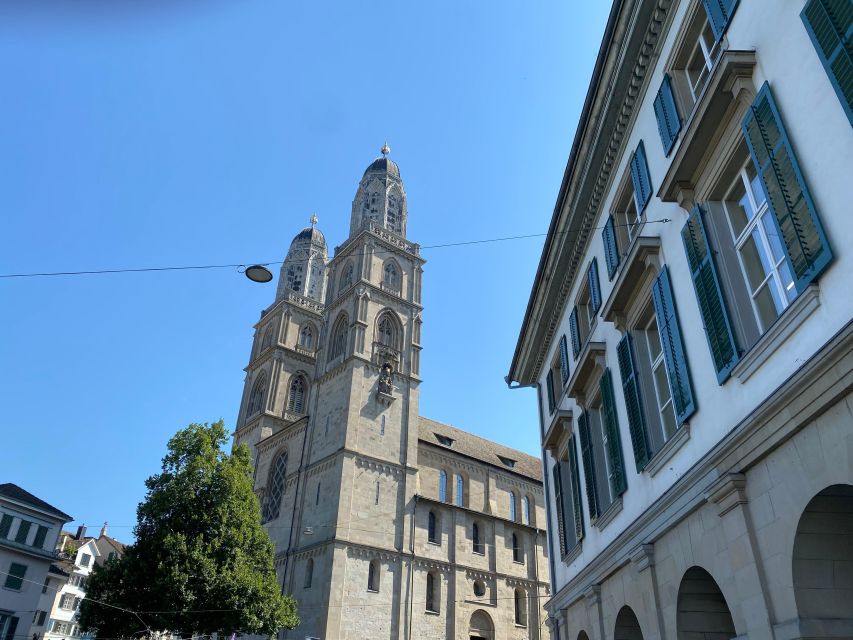
Two things I especially like: the route is explained with photos and detailed directions, so you do not feel lost at every turn, and the audio focuses on real characters around places like Grossmünster, Cabaret Voltaire, and the guild buildings. The only real drawback is practical, not romantic: you need your own smartphone internet and headset, and this tour is not set up for wheelchair users.
Key Points at a Glance
- Bahnhofplatz start point with no live guide, just an online link you open right away
- English audio recorded by a professional speaker, easy to follow at walking speed
- Old Town plus big-name sights, from Grossmünster and Fraumünster to St. Peter’s and the Water Church
- Time-period stories, including sensitive topics tied to past inhabitants
- Do-it-your-way pace, great for a short Zurich visit or a second pass through the center
- One recurring caution about photos or directions not matching Google Maps style, so keep a map app handy
Price and Time, The Real Value Question
At about $13 per person for a 2 to 2.5 hour self-guided experience, you are paying for two things: a professionally recorded English narrative and a pre-planned walking route with directions. You are not paying for a live guide, or group logistics. That makes it feel more like a smart phone rental with a good brain behind it.
Here is why that matters. Zurich can be expensive and time can disappear fast. If you only have a half day, this tour gives you coverage of the core sights, then adds the “why does this place matter” layer through stories. In other words, you are not just seeing famous buildings, you are learning how people used them, argued, built power, and tried to change their world.
The main value check is also the main risk: since there is no live guide, you cannot ask a person to re-route you if your phone signal or link has issues. I treat that as normal for self-guided tours, but it is still something to plan for.
More self-guided audio tours in Zurich:
- Zurich: City Bus Tour with Audio Guide and Lake Cruise
★ 4.3 · 1,195 reviews - Zurich City Tour with Audio Commentary
★ 4.0 · 372 reviews - Zurich: City Top Attractions Tour by Bus with Audio Guide
★ 4.3 · 282 reviews
Starting at Bahnhofplatz, and What Self-Guided Actually Means
The tour begins at Bahnhofplatz in Zurich. You do not meet a guide at a desk. Instead, after booking, you use the internet link provided to access the audio and the route guidance. That means you should show up ready.
Bring:
- Headphones
- a charged smartphone
- internet access
A small lesson from real-world bookings: one person looked for an information center at the train station on a public holiday and found it closed, then felt stuck because the experience is self-guided. The takeaway is simple. Do not plan on a staff member being present at a tourist information desk. Plan to start where the tour says, then follow the link.
If you prefer less tech stress, do this before you leave your hotel: open the link once on Wi-Fi, test the audio, and save the starting directions in your mind. Then you are walking, not troubleshooting.
The “Whole Zurich” Hit List, Grossmünster to Fraumünster
This tour covers the major icons you see on every Zurich shortlist, including the church cluster around the Limmat and the viewpoints that make Zurich feel surprisingly dramatic for such a compact city.
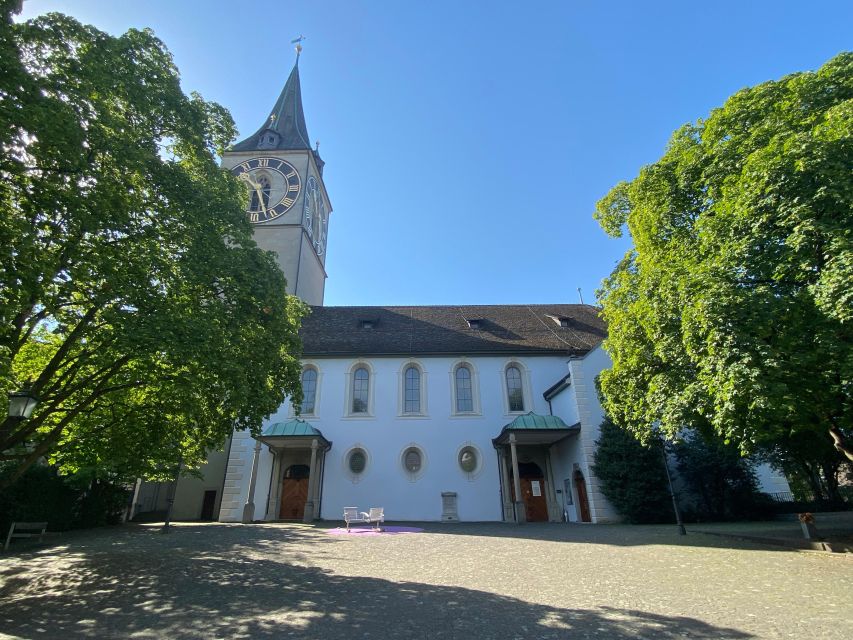
Grossmünster, Fraumünster, and St. Peter’s Church
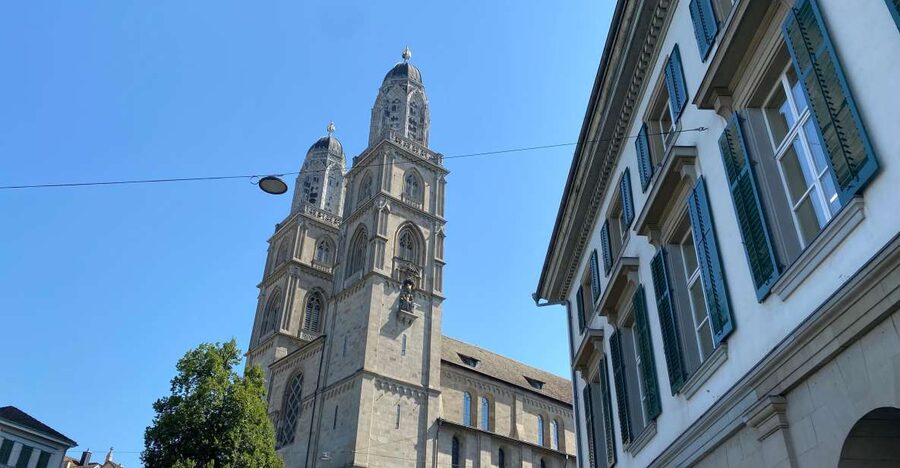
You will hear stories tied to Grossmünster and Fraumünster, plus St. Peter’s Church. Even if you already know they are famous, what changes on an audio tour is the sequence of meaning. Narration can connect the buildings to the people who lived their daily lives nearby, and to the choices that shaped the city.
St. Peter’s Church is especially satisfying when you listen with walking in mind, because you get to look up and then keep moving. You are not stuck standing still. You can take in the scale, then move on while the story finishes.
A few more Zurich trips worth comparing
- Zurich Private Customizable Guided Walking Tour
★ 5.0 · 195 reviews - Zurich: Private Walking Tour with a Local Guide
★ 4.6 · 63 reviews - From Zurich: Jungfraujoch Guided Day Tour with Cogway Train
★ 4.4 · 61 reviews - The Dark Side of Zurich: Self-Guided Audio City Tour
★ 4.4 · 52 reviews
Water Church and the feeling of old streets
You will also cover the Water Church. Churches around water matter more than you might think. They sit at points where commerce, travel, and daily life passed through. With audio storytelling, the church becomes less of a postcard and more of a landmark tied to how Zurich worked.
If you do not like churches, do not worry. The audio is not just “look at this building.” It is using the buildings as anchors for people and events.
City Hall, Opera House, and the Power Centers You Can Walk To

Zurich has always had a talent for mixing civic pride with practical politics. This tour points you at places where decisions were made and culture was presented, not just where tourists pose.
Zurich City Hall
Hearing a story at City Hall helps you notice something you might normally skip: civic buildings are designed to impress. They communicate authority. On an audio walk, you can connect that architecture to the city’s past inhabitants and how power showed up in real stone.
Zurich Opera House
The Opera House brings a different flavor. Even if opera is not your thing, the building is part of Zurich’s identity as a modern city that still remembers earlier eras. The narration gives you context that keeps the stop from feeling random.
Tip: keep your pace steady. These stops are good for a quick look up, a short pause to absorb details, then back on the route.
Paradeplatz and Bahnhofstrasse, Where Zurich Shows Its Everyday Face
One of the strongest parts of the tour is that it does not treat Zurich like an open-air museum. It takes you through Paradeplatz and Bahnhofstrasse, the places that feel like the city’s pulse.
Paradeplatz
This is where the city’s financial energy shows. The audio helps you understand how a commercial square can still hold older layers beneath the surface. You end up looking at familiar streets with fresher attention.
Bahnhofstrasse
Bahnhofstrasse is where you get your classic Zurich walk: shopfronts, passersby, and an easy route to keep the tour moving. If you stop for food, you are not breaking the tour flow too much. You can step aside briefly, then pop back into the next audio segment.
If you want to make this more authentic, do one small thing: pause near an older-looking doorway or side passage and keep your ears on. The audio is designed to make you notice the details between major attractions.
Lindenhof and Roman Baths, Viewpoints With a Story Behind Them
Lindenhof is one of Zurich’s best “pause and look” spots. In this tour, it works as both a rest point and a narrative turn, because viewpoints often matter most when you understand what used to be there.
Lindenhof
At Lindenhof, you get city views and an instant sense of the old town’s layout. The audio adds the missing piece: how people saw the city, defended it, traveled through it, and built their lives around that geography.
Roman Baths
Then comes Roman Baths, a stop that helps you feel how deep Zurich goes. Even if you cannot picture Roman street life perfectly, the audio narration guides your imagination and makes the site feel like an actual layer in the city, not a random historical object.
Practical note: plan for uneven ground in parts of the center. You are doing a walking tour. Comfortable shoes beat fashion.
Cabaret Voltaire and Lenin’s House, Politics and Culture in the Same Block
This tour has the guts to go beyond pretty facades. Two of the most memorable stops on the list are Cabaret Voltaire and Lenin’s House.
Cabaret Voltaire
Cabaret Voltaire connects art, rebellion, and the idea that Zurich was not only a banking hub. On audio, this kind of stop works well because it can explain the context behind movements without dragging you into a textbook.
Lenin’s House
Lenin’s House is a “sensitive and thought-provoking” topic area. The value here is not shock. The value is perspective: you hear about past inhabitants and the consequences of political decisions. It turns a building you might otherwise glance past into a place with weight.
If you want a tour that avoids heavy topics, this might feel a bit intense. If you like stories that take history seriously, this is where the tour becomes most memorable.
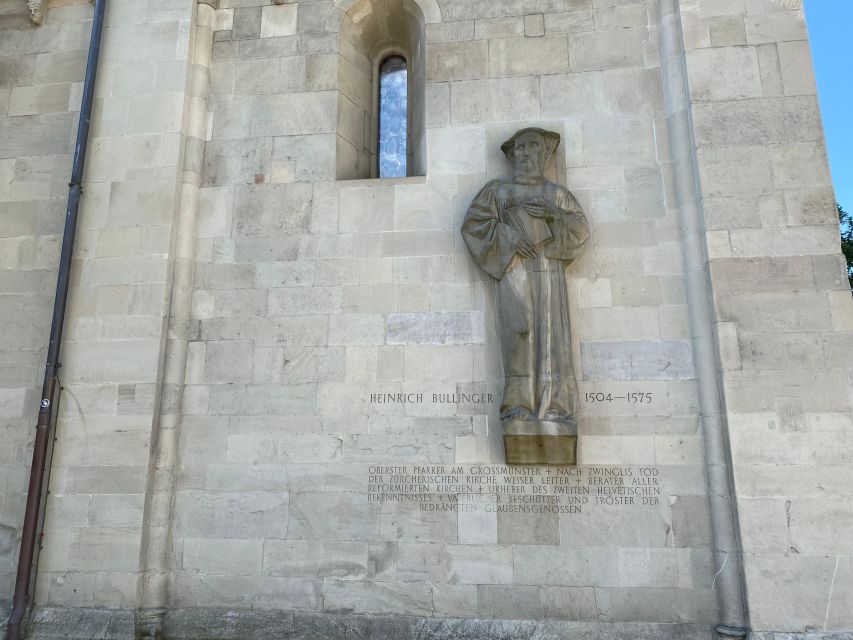
Alfred Escher, Pestalozzi, Zwingli, and Hans Waldmann: Monuments With Meaning

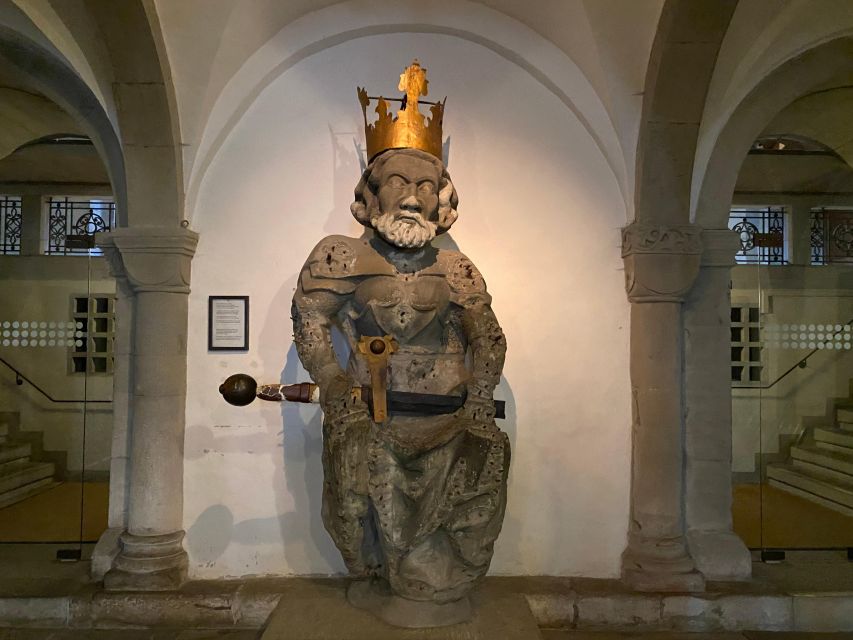
The route includes monuments tied to key figures: Alfred Escher, Johann Heinrich Pestalozzi, Ulrich Zwingli, and Hans Waldmann. This is a clever part of the design because monuments are easy to treat as decoration. The audio turns them into a quick, understandable lesson.
- Alfred Escher represents Zurich’s modern push and institutional power
- Johann Heinrich Pestalozzi brings in education and human values
- Ulrich Zwingli connects to reform and religious change
- Hans Waldmann adds a darker edge, since the past includes good intentions, harsh decisions, and power struggles
What I like about this approach is that you do not need prior knowledge. The narration helps you place these people into Zurich’s story, and you can decide later what to read deeper.
Sculptures You Might Miss, Ganymed and Pavilion

This tour includes art stops too, including Ganymed and the Pavilion sculpture. These are the kind of pieces you might walk by on your own without knowing they matter.
On an audio tour, sculptures work like punctuation. They give you a moment where the city shifts from architecture to interpretation. Even if you do not fully “get” the art right away, the narration gives you language to understand what you are seeing.
If you are the kind of traveler who loves looking closely, you will enjoy these. If not, treat them as quick breaks that keep the walking experience from getting repetitive.
Guild Buildings and the Masonic Lodge, A Zurich Built by Trade
One of the most interesting ways to understand Zurich is through the guilds. This tour includes buildings for groups like the Guild of Millers, Guild of Bakers, and the Guild of Salt and Spice Merchants, plus the Masonic Lodge.
Why guilds matter:
- They shaped who had access to work and influence
- They created systems that lasted for generations
- They turned trade into identity
The tour approach is practical. It does not force you to memorize dates. It connects buildings to the roles people had, including the balance between hard work and human conflict.
This is where you start noticing the pattern: Zurich is not only a place with churches and banks. It is also a city shaped by ordinary systems of production, supply, and community rules.
Urania Observatory, Ending With a Different Kind of View
At Urania Observatory, you get a more reflective finish. Observatories are about looking outward, but in city tours they also work as a reset button.
After churches, politics, and guild power, you end with a stop that feels calmer and more curious. Even if you only take a brief moment, it helps the whole experience feel like a story with an ending, not just a stack of sights.
What the Audio Quality and English Clarity Actually Feel Like
The audio is recorded by a professional speaker and in English. That matters for two reasons. First, pacing. A good narration rhythm helps you walk without constantly pausing to reread instructions. Second, clarity. Multiple bookings praised how understandable the English is.
If you are not a fluent English listener, you will probably still be fine because the narration is built for a walking tour speed. But you should still bring basic patience. Self-guided means you carry the load.
Route Clarity, Photos, and a Useful Workaround
A strong selling point is that the route includes photos and detailed directions. That is what keeps you from wandering in circles in Zurich’s tight streets.
Still, there is one caution that I would take seriously if you are a map person. One booking criticized the photos and descriptions as improvable and suggested adding a Google Maps style routing approach. I cannot change that, but you can protect yourself by using a simple workaround: keep your phone’s map app open in the background. You do not need to follow it, but it helps if a turn feels ambiguous.
The goal is confidence. You are already spending time walking the city, so you want navigation to feel effortless, not like a scavenger hunt.
Who This Tour Is Best For
This is a great fit if:
- you want to cover Zurich’s key sights in a couple hours
- you like history explained in story form, including serious topics
- you enjoy self-paced walking without group pressure
- you travel with headphones and can manage an internet link on your phone
You might skip it if:
- you cannot rely on mobile internet
- you need wheelchair-friendly routing (this one is not suitable)
- you prefer a live guide who can answer questions on the spot
Should You Book Zurich in the Mirror of the Past?
I would book it if you want a short, high-impact Zurich walk that goes beyond postcards. For $13, the combination of a professional English audio guide, route photos, and a strong selection of places like Grossmünster, Fraumünster, Cabaret Voltaire, and the guild buildings is good value. The stories, including sensitive and thought-provoking themes, make the city feel more human.
I would hesitate only if you know you hate navigation by phone or you expect help from a staffed desk at the station. This tour is self-guided. If you show up ready with headphones, a charged smartphone, and internet, you will get a satisfying mix of major sights and real Zurich characters walking right beside you.
FAQ
How long is the Zurich in the Mirror of the Past audio tour?
The audio tour takes about 2 to 2.5 hours.
Where does the self-guided tour start?
It starts at Bahnhofplatz in Zurich.
What do I get for the price?
You get a high-quality audio guide in English, with clear route explanation supported by photos and detailed directions.
Do I need headphones and internet?
Yes. Bring headphones, a charged smartphone, and internet access so you can use the provided link after booking.
Is there a live guide?
No. There is no live guide. You explore the city using the internet link provided.
What languages are available?
The audio guide is in English.
Is the tour wheelchair-friendly?
No, it is not suitable for wheelchair users.
Recently reviewed around Zurich
- Zurich Trendy Artisan & Culinary Encounters★ 5.0 · 6 reviews
- Zurich: Virtual Reality Arena★ 3.8 · 6 reviews
- Zurich: Private tour to Interlaken, Grindelwald & Jungfrau★ 5.0 · 3 reviews
- Zurich: Private Day Trip to Jungfrau and Lauterbrunnen★ 5.0 · 7 reviews
- Zurich’s best-kept secret: the hidden world of mushrooms!★ 5.0 · 7 reviews
- Zurich Premium Fitness Pass★ 3.0 · 3 reviews
- Zurich: Private custom tour with a local guide★ 3.5 · 8 reviews
- Zurich : Private Custom Walking Tour With a Local Guide★ 3.7 · 8 reviews
Self-Guided Audio Tours, side by side.
City Bus Tour with Audio Guide and Lake Cruise
Read our review →
City Top Attractions Tour by Bus with Audio Guide
Read our review →
Mt. Rigi Self-Guided Tour: Lake Lucerne Cruise and Mountain Spa
Read our review →
The Dark Side of Zurich: Self-Guided Audio City Tour
Read our review →
Audio Guided City Tour and Train to “Top of Zurich”
Read our review →

Lists this tour appears in