

Reviewed · ZURICH OLD TOWN WALKING TOURS
Zurich: Old Town Walking Tour
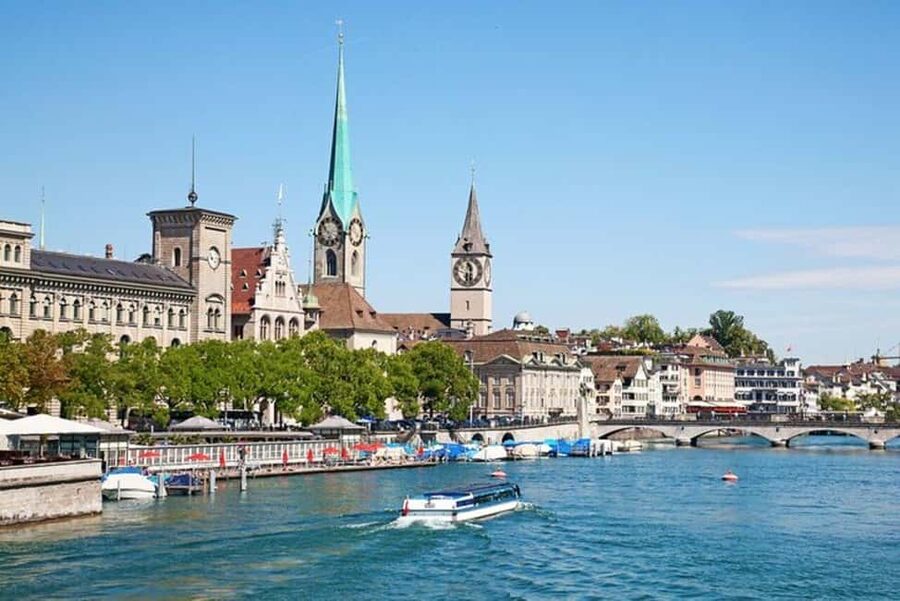
A Zurich Old Town walking tour works because the city shows itself in layers, from medieval corners to big hillside views. I like the mix of story stops and practical sights, especially Fraumünster’s Chagall Windows and the run of views around Polybahn and Polyterrasse. You get a concentrated look at the old streets without spending the whole day zig-zagging on your own.
One possible drawback is that guide quality seems to vary. The tour has great moments with guides like Laura and Alexander, but there are also complaints about late starts, too little commentary, or a guide who ends up managing logistics more than history.
If you go in with the right expectations, this tour is a strong way to start a Zurich visit. The pace is designed for about 2 hours, and it’s offered in several languages, including English, German, Italian, and Spanish.
Key things to notice before you go
- Hirschenplatz first: old buildings, wine bars, and an easy launch pad into the lanes
- Polybahn to Polyterrasse: a short ride and then a high viewpoint over Zurich
- Fraumünster plus Chagall: stained glass that’s famous for a reason
- Spiegelgasse history: a street tied to Lenin’s time in Zurich
- Wasserkirche underground ruins: history literally under your feet
- Lindenhof Hill: walk up for views, then learn what lies beneath
Entering Zurich Old Town from Hirschenplatz, then working your way downhill
Most Zurich tours start with landmarks. This one starts with atmosphere, at Hirschenplatz near where the old center begins to feel intimate. You walk past older buildings, and the square’s vibe is very Zurich, coffee and wine bars packed into compact spaces.
What I like most here is that it sets the tone for the whole walk. Zurich can look polished and orderly from a distance, but in the lanes it becomes textured: narrow paths, small turns, and little squares that feel like they were made for wandering.
You’ll also notice how the route avoids getting too “museum-ish.” It’s not a checklist of doors you can’t enter. It’s a guided route that helps you understand why these places mattered, not just what they look like.
More Old Town walking tours in Zurich:
- Zurich Old Town Walking Tour: 2-Hours
★ 4.6 · 1,008 reviews - Zurich Walking Tour With Cruise and Aerial Cable Car
★ 5.0 · 669 reviews - Zurich Old Town Walking Tour
★ 4.5 · 479 reviews
Polybahn and Polyterrasse ETH viewpoints, where the city suddenly makes sense
A big reason to do a walking tour in Zurich is orientation. After Hirschenplatz, the tour shifts toward Central Polybahn, a cable car. Even if you’re the type who usually skips rides, this one is worth it for the way it resets your perspective.
From the Polybahn and on up near Polyterrasse ETH, you get high-angle views that explain the city’s shape: the lake, the river line, and the cluster of old streets below. It helps you “see the map” in your head while you’re still in the center.
Here’s the practical tip. If your legs are fine but your patience is short, this viewpoint segment can still be your win. You get photos, context, and a mental reset before you go back into the tighter streets.
Zentralbibliothek Zürich and the city wall story you can actually picture

Next comes a stop that feels like a quiet power move: Zentralbibliothek Zürich. The highlight is that you can connect today’s streets with older defenses, including parts of the old city wall and fortifications.
I like this moment because it turns “old town” from a vague label into something concrete. You’re not just admiring architecture. You’re learning how Zurich protected itself, why people built where they built, and how those choices shaped the streets you now walk.
This is also a good time to listen closely. The walls and fortifications can sound abstract if your guide rushes through them. If the guide explains what you’re looking at, you’ll leave with a much clearer picture of the city’s early layout.
Brunngasse and Spiegelgasse, plus the Lenin connection in one compact stretch
The tour then steps into two of the most memorable lanes for historical flavor: Brunngasse and Spiegelgasse.
Brunngasse is charming in a way that’s hard to fake. It’s the kind of street where buildings feel close enough to read, and where small details matter. The tour also points out an old picture in a private building, which is the sort of clue you would never notice on your own.
Then comes Spiegelgasse, famous here for one specific claim: it’s where Lenin once lived during his time in Zurich. Even if you know nothing about him beyond the basics, this stop changes how you think about a “quiet European city.” History can be sitting in the middle of everyday streets.
One consideration: this part of the walk is where you’ll want your guide’s pacing to feel natural. If your group is moving fast, you may wish for a little more time to look at storefronts, façades, and the street angle itself.
A few more Zurich trips worth comparing
- 3 in 1: Zurich Walking Tour – Cruise on the Lake – Cable Car Ride to Felsenegg
★ 5.0 · 227 reviews - Zurich Private Customizable Guided Walking Tour
★ 5.0 · 195 reviews - Swiss Chocolate Walking Tour of Zurich
★ 4.5 · 120 reviews - Zurich: Private City Walking Tour with Polybahn Ride
★ 5.0 · 83 reviews
Grossmünsterplatz, the cloister feel, and a medieval baptismal font
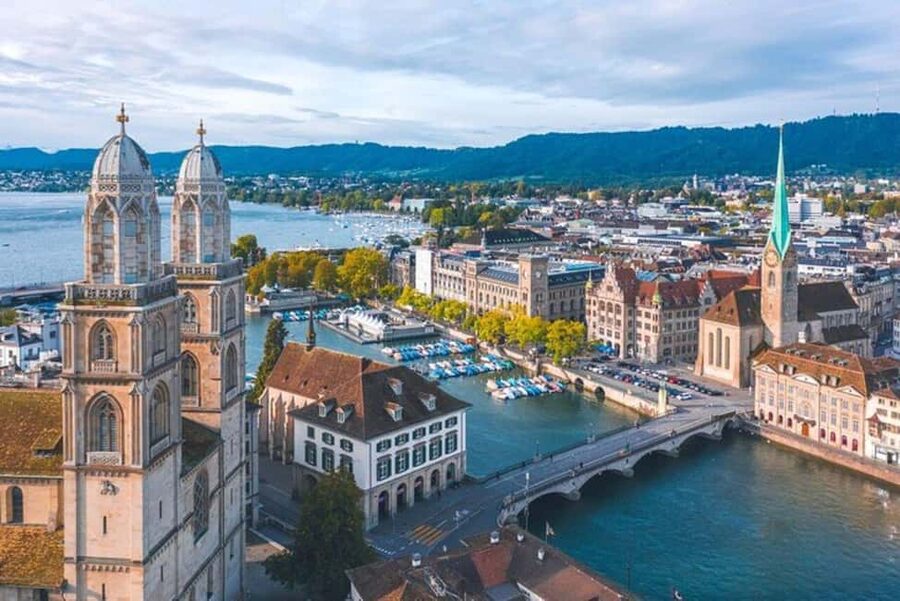
From the lanes, you’ll head toward Grossmünsterplatz, home to Grossmünster. This is one of Zurich’s core sights, but the tour angle helps you see it differently.
The church visit isn’t only about what’s famous on the outside. You also get the chance to connect with a hidden-feeling space: a cloister area and a chapel that includes a medieval baptismal font.
This matters because baptism fonts are the kind of object that makes time feel real. A painted sign on a wall can be ignored. A carved, centuries-old piece you can actually see changes the way you think about daily life in medieval Zurich.
Fraumünster and the Chagall Windows that do the talking for you
No Zurich old town walk is complete without Fraumünster. The big reason is the Chagall Windows. Even people who aren’t usually drawn to stained glass tend to pause here, because the windows give you color and story at the same time.
I like how the tour keeps you moving but also gives you time for the wow factor. Stained glass isn’t only about being pretty. It’s about light, symbolism, and craft. When your guide explains what you’re seeing, the colors stop being random and start feeling intentional.
Fraumünster also pairs well with the rest of the day because it sits between civic Zurich and the more everyday lanes. You’ve been learning about walls and streets. Now you get a spiritual and artistic center that’s visibly tied to the city’s identity.
If you’re traveling with kids, this is usually the easiest stop to hold attention. Color works better than lectures, and the windows are the rare sight that earns “look again” time.
Wasserkirche, underground ruins, and the story of Felix and Regula
After Fraumünster, the tour turns toward Wasserkirche, known for underground ruins. You’re not just hearing about historic layers. You’re being pointed to the fact that some of Zurich’s most important physical history sits below the surface.
Wasserkirche is also connected to the execution of Felix and Regula, a detail that adds weight to the visit. It’s one of those moments where a building becomes a timeline marker.
This stop can feel darker than the rest of the walk, and that’s okay. Zurich’s charm includes contrasts. The more your guide frames it, the more you’ll understand why this place matters even if you’re not a church-history person.
I’d keep an eye on the pacing here. Underground ruin areas can be physically limiting, so you want the group to move smoothly and not pile up while everyone tries to read small details.
Lindenhof Hill, seeing above the ruins and learning what sits under you
The final climb brings you to Lindenhof Hill. This is where Zurich’s old town earns its dramatic perspective. You look out over the central area, and the city suddenly feels like it was built around a set of smart, defensive choices.
What makes this stop more than a viewpoint is the tour’s focus on historical ruins underground. You’re learning that the hill is not just a scenic spot. It’s tied to remnants and layers that predate the street-level scene.
If you’re short on time, this is a strong ending because it compresses meaning into one final scene. The walk has taught you street history, church history, and defense history. Lindenhof turns it into a single, visible geography lesson.
Also, it’s a good way to end without exhausting yourself. You get the payoff at the end, then you can finish the day in the lanes or take a tram ride back.
Price and what you actually get for a 2-hour Zurich walk
The listed price is $59 per person for about 2 hours, which is a fair range for a guided old town route that hits multiple big-name sites. Zurich tours can get expensive fast, so this feels like decent value if you’re getting real commentary and not just supervision through streets.
There’s one pricing wrinkle to keep in mind. One review mentions a price of 200€, which is far higher than the listed figure. That could reflect a private option or a different booking structure, but it does mean you should pay attention to what you’re actually selecting.
Here’s my value test. If the guide connects the dots between Hirschenplatz, fortifications, churches, and the viewpoints, the tour is worth it. If the tour turns into a quiet march with minimal explanations, it won’t feel like enough for the price.
Guide quality and the pattern behind the 3.9 rating
With a rating around 3.9 and about a dozen reviews, the story is mixed. The positive side shows a clear pattern: when the guide is comfortable with the city, the tour becomes more than route-following.
For example, Laura is praised for knowing Zurich well and having a great personality. Alexander is noted for being accommodating even with rain and for offering conversation that touched on how Switzerland works, along with history, religion, and everyday life. Celine also gets credit for being full of knowledge. And Gustavo gets multiple mentions as friendly and enthusiastic, including giving a solid overview.
On the downside, there are complaints about late arrival. One person described a major delay in the guide showing up and then being nudged toward buying transport tickets, which feels mismatched for a walking tour. Another complaint says the guide left them at a tram stop without confirming the next step. There’s also criticism that the guide provided too little information, turning it into more of a supervised stroll than a history-led walk.
So here’s the practical takeaway. If you’re booking for the stories, do it with confidence only if you want a guide-led experience, not just guided walking. If you’re expecting a heavy lecture style, you might want to confirm what type of commentary is typical in your language and group format.
Who this tour suits best in real life
This works well if you:
- Want an efficient first look at Zurich Old Town in 2 hours
- Like guided stops that combine views with specific sites, like Polybahn and Polyterrasse
- Care about art and symbolism, especially the Chagall Windows
- Enjoy history that connects to real people, like the Lenin reference in Spiegelgasse
It may be less ideal if you:
- Need a nonstop stream of facts and hate pauses
- Are very sensitive to timing and punctuality
- Are paying a premium price and expect very detailed, high-touch guiding
Should you book this Zurich Old Town walking tour?
Yes, if you want a guided orientation through the city’s key old-town highlights and you’re comfortable with the idea that guide personality can make or break the experience. The combination of Chagall at Fraumünster, underground history at Wasserkirche, and view payoff at Lindenhof gives you plenty to remember, even if the pacing feels a bit uneven.
Before you book, sanity-check one thing. Look for the option that matches what you’re paying for. At least one review suggests a much higher price in some cases, so make sure you’re selecting the format that fits your budget and your expectations for guidance.
If you show up at Mühlegasse 17 near Hotel Scheuble, bring comfortable walking shoes, and plan to ask questions when something feels unclear, you’re set up for a solid Zurich start.
FAQ
How long is the Zurich Old Town Walking Tour?
It lasts 2 hours.
Where does the tour start?
You meet your guide near Hotel Scheuble, and the starting address is Mühlegasse 17.
How much does it cost?
The price listed is $59 per person.
What is included in the tour price?
You get a private or group walking tour (depending on the option you select) plus a guide.
What languages are offered?
The live tour guide is available in Spanish, Italian, English, and German.
Is the tour wheelchair accessible?
Yes, it is listed as wheelchair accessible.
Is private group service available?
Yes, private group available is listed.
Recently reviewed around Zurich
- Zurich Trendy Artisan & Culinary Encounters★ 5.0 · 6 reviews
- Zurich: Virtual Reality Arena★ 3.8 · 6 reviews
- Zurich: Private tour to Interlaken, Grindelwald & Jungfrau★ 5.0 · 3 reviews
- Zurich: Private Day Trip to Jungfrau and Lauterbrunnen★ 5.0 · 7 reviews
- Zurich’s best-kept secret: the hidden world of mushrooms!★ 5.0 · 7 reviews
- Zurich Premium Fitness Pass★ 3.0 · 3 reviews
- Zurich: Private custom tour with a local guide★ 3.5 · 8 reviews
- Zurich : Private Custom Walking Tour With a Local Guide★ 3.7 · 8 reviews
Zurich Old Town Walking Tours, side by side.

Zurich Walking Tour With Cruise and Aerial Cable Car
Read our review →
3 in 1: Zurich Walking Tour – Cruise on the Lake – Cable Car Ride to Felsenegg
Read our review →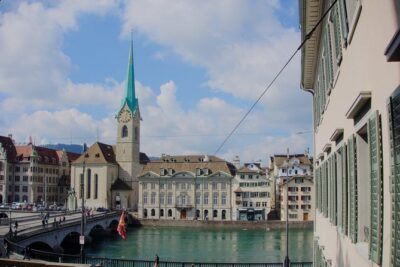
Zurich Private Customizable Guided Walking Tour
Read our review →

Lists this tour appears in