
Reviewed · HISTORICAL TOURS
Zurich a journey through time, history and the Reformation
Zurich’s charm is the easy part. What makes this tour different is that you’re not just looking at old buildings, you’re walking through the real streets where the Reformation took shape and ideas turned into action. The focus stays on Huldrych Zwingli and the places that carried his debates, sermons, and reforms forward.
I particularly like that the route connects big ideas to specific locations, from early city layers (Celtic and Roman) to Zurich’s Old Town. I also like that you get inside the Fraumünster with an accredited guide, including the well-known Chagall windows. One thing to consider: it’s a history-heavy, walking-focused format, so if you want a lighter, mostly photo-stop city stroll, this may feel intense.
Key reasons this tour is worth your time
- Zwingli-centered story line that explains why Zurich became a core Reformation hub
- Fraumünster access included, plus context that goes beyond the Chagall windows
- Roman and Celtic origins on the same route, not as a separate side quest
- Short guided stops that keep momentum while still giving you enough background to connect the dots
- Legend and anecdote storytelling, which helps the Old Town feel alive rather than museum-like
- Private group format (so the pace can stay comfortable for your group)
Zurich’s Reformation story starts before the Reformation
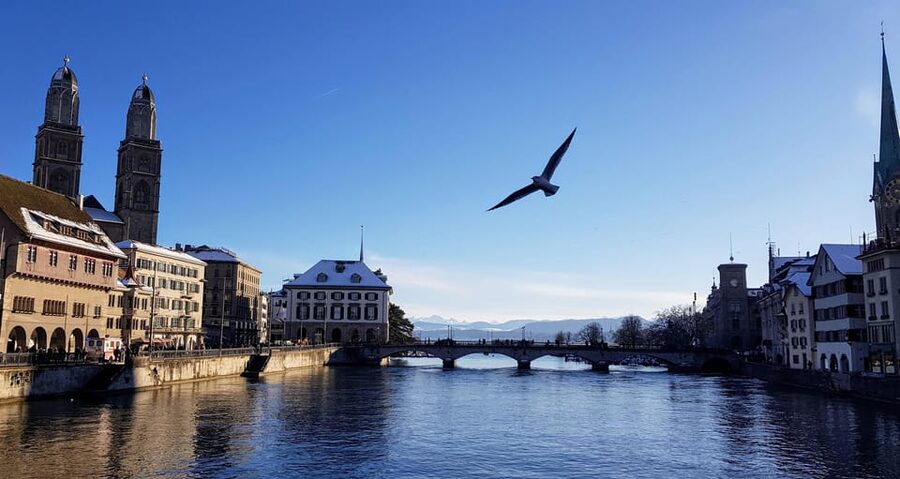
Zurich can look like the kind of city that grew by careful Swiss planning and good taste. This experience flips that script. Instead of treating the Old Town as a pretty backdrop, I like how it frames the city as a stage where belief, power, and public argument mattered. If you’ve ever wondered how a single city could influence European history, this tour gives you the geography of that answer.
At the center is Huldrych Zwingli, the reformer who helped turn Zurich into a center of radical change more than 500 years ago. You don’t just hear about theology in the abstract. You walk to the places where preaching and debate happened, and you get the practical context behind why those words had real consequences.
The Reformation is also a story of timing. Ideas were circulating, but Zurich’s role depended on local conditions, local leaders, and the public nature of religious life. On this route, those pieces click into place because you keep returning to one question: why Zurich, and why then?
A few more Zurich trips worth comparing
- Zürich Historic District Tour
★ 5.0 · 206 reviews - City tour historic old town Zurich
★ 4.7 · 38 reviews - Lucerne: 1-Hour Historical Tour with Night Watchman
★ 5.0 · 122 reviews
Meeting at Heiristeg, then getting your bearings fast
The tour’s official meeting point is at the corner of Uraniastrasse 1 / Heiristeg. That’s a good start point because it puts you close to the Old Town walking axis while still feeling like you’re entering the story rather than starting in the middle of a random street grid.
From here, the pace is steady and structured for a 2.5-hour experience. It’s also set up as a private group, so you’re not getting swallowed by a large crowd. That matters on a history tour, because you’ll want to hear the explanations clearly and have a chance to ask follow-up questions when something clicks.
Lindenhof viewpoint: where Roman Zurich still leaves a mark
One of the first stops is Lindenhof, guided for about 10 minutes. This is where the tour makes its main promise feel real fast: Zurich is layered. You don’t only get medieval or church history, you get earlier roots.
Lindenhof is tied to the Romans. You’ll get the connection between the strategic function of the spot in Roman times and how the viewpoint works today. The result is a rare kind of learning, where you can literally look across the city and understand why someone would have guarded or watched this area.
Practical tip: plan to stand still for a minute with the view. It’s not a quick “look and go.” The tour frames this as a place where you can understand what Zwingli helped transform, because the city layout and river presence explain a lot about how people moved, gathered, and carried ideas.
Archäologisches Fenster: the city’s hidden layer shows through
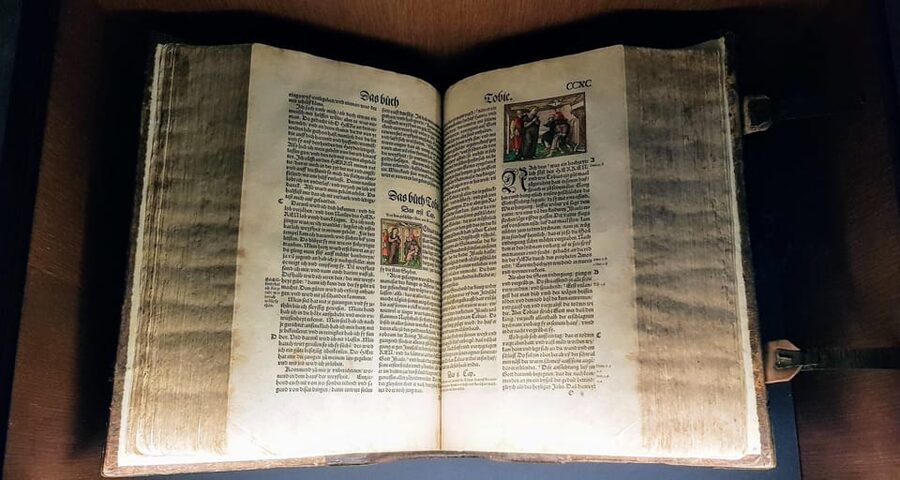
Next you’ll visit the Archäologisches Fenster for around 15 minutes. Even if you’ve seen “archaeological window” concepts elsewhere, I like how this one fits the theme. This is Zurich as a palimpsest: newer stories sit on top of older ones, and sometimes the older ones are still visible if you know what to look for.
What matters for you on this tour is not just that you’re seeing archaeology. It’s that you’re seeing how long people have been shaping this city. That stretches the Reformation narrative into a longer timeline, so the reforming movement feels less like a sudden miracle and more like one chapter in a long local evolution.
Another Swiss day out, at a different pace:
- Lindt Home of Chocolate Museum Entry Ticket
★ 4.7 · 9,329 reviews - Zurich: Day Trip to Grindelwald, Interlaken & Lauterbrunnen
★ 4.5 · 4,699 reviews - Zurich: City Tour, Cruise, and Lindt Home of Chocolate Visit
★ 4.5 · 4,624 reviews - From Zurich: Bus Day Trip to Heidiland and Liechtenstein
★ 4.5 · 2,531 reviews
Rathausbrücke and city power, told without lecturing
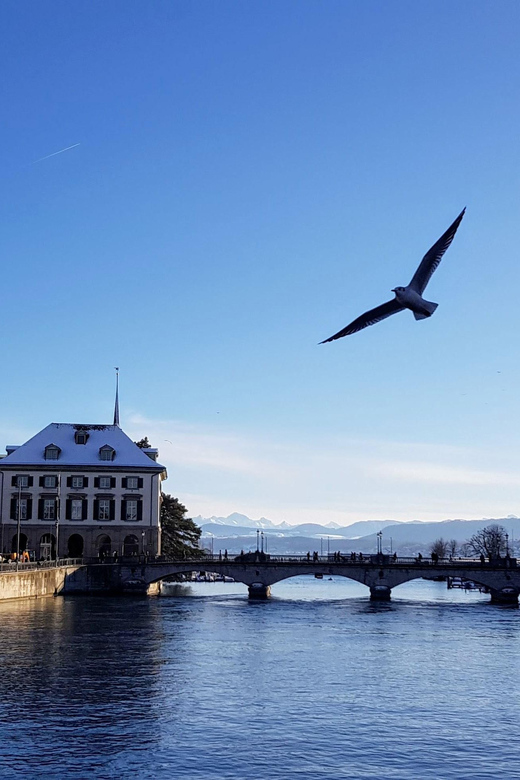
The Rathausbrücke stop is brief, about 10 minutes, but the theme is big: civic life and public authority. Bridges are natural meeting points in old cities, and in Zurich, public life around governance and church mattered. The tour uses this as a narrative connector so the story doesn’t jump abruptly from one era to another.
If you like tours that explain why a street corner is meaningful, this is one of those moments. You’re not memorizing dates for the sake of dates. You’re being shown how geography and institutions fit together.
Roman Heater System: a surprising stop that makes the past tangible
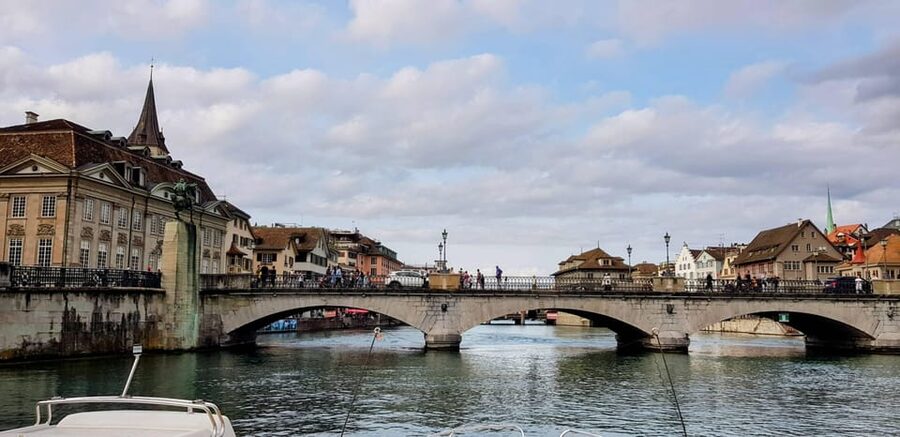
Then comes the Roman Heater System for about 10 minutes. It’s the kind of site that can sound niche until you’re standing there. I like it because it grounds the ancient story in something physical and human. Heating technology might not be the headline in a Reformation tour, but it makes the city feel inhabited across centuries.
This matters for your understanding later. When you get to church history and reform debates, you’ll remember that these places were built, lived in, upgraded, and used. The city wasn’t waiting for 1500s reformers. People have been making life here for a long time, and that context makes the Reformation feel more grounded.
St. Peter’s Church: a major landmark in a city of arguments
At Church of St. Peter, Zurich, you get another guided segment of about 10 minutes. St. Peter’s functions as a key anchor point in Zurich’s church landscape. The tour uses it to keep the Reformation story tied to real religious spaces instead of floating off into lecture mode.
Even if you don’t know Zurich church architecture well, you’ll get enough orientation to understand what these buildings represented in everyday life. That’s the difference between seeing churches and understanding churches.
One note: access details can vary, and the tour format focuses on what it can show effectively within the timeframe. If you’re hoping for maximum interior time across multiple churches, this may feel more story-focused than “tour every room.”
A few short stops for stories between the big sites
Your route includes a handful of additional guided moments of around 10 minutes or less, plus some short transitions. Since not every stop is spelled out with a specific site name in the itinerary you’ll receive, treat these as part of the pacing. They’re there to connect the dots between the major landmarks, especially around Zwingli and the Reformation timeline.
I like that this keeps you from feeling like you’re walking straight through empty time. You’re always hearing a story, even when you’re not at the largest monument.
Fraumünster: the Reformation church you actually get inside
Now we get to the highlight for many people: Fraumünster, with about 20 minutes of time during the visit, and an important point for planning.
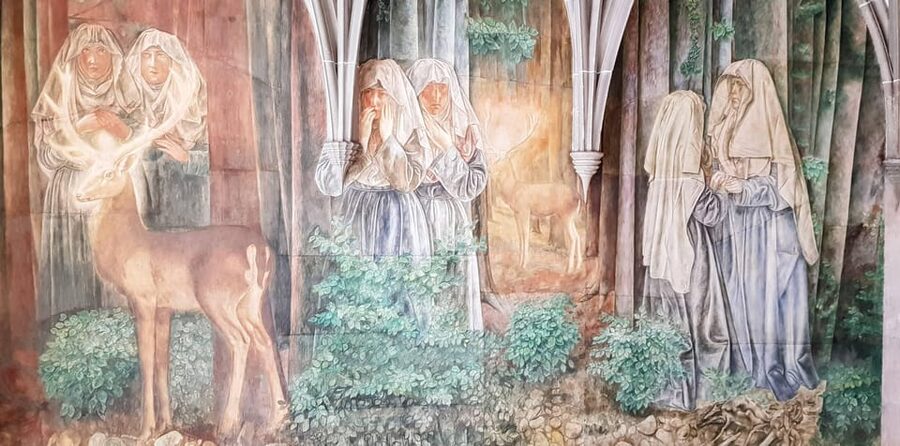
Admission to Fraumünster is included, and you’ll get to go inside with an accredited Fraumünster guide. The tour also specifically calls out the Chagall window cycle in the choir, so you’re not just walking past an attraction. You’re getting guided context for why the church matters socially and religiously.
This is where the Reformation theme becomes more than a headline. You’ll uncover layered history that goes beyond art. Even if you love stained glass, you’ll likely enjoy the added explanations because the guide connects the visual details to church life and public change.
A practical mindset: plan to look slowly. The guide’s job here is to keep you from seeing the windows as decoration only. You should come away understanding what the space symbolizes and how it fits into Zurich’s religious shifts.
From a value standpoint, this stop earns its place in a 2.5-hour tour. Entrance included plus a guided interior visit is a strong combo in a city where costs and time can add up fast.
Hans Waldmann statue area: civic leadership, reform tensions
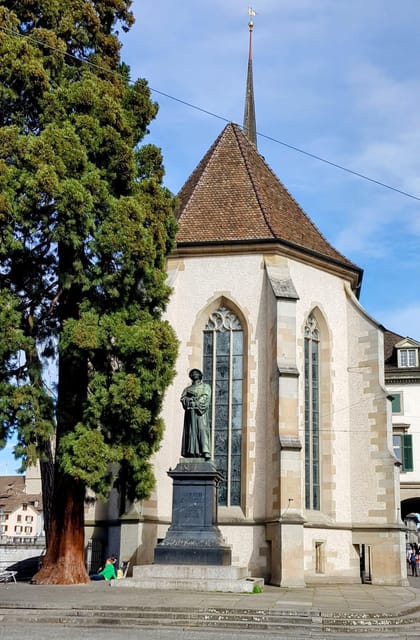
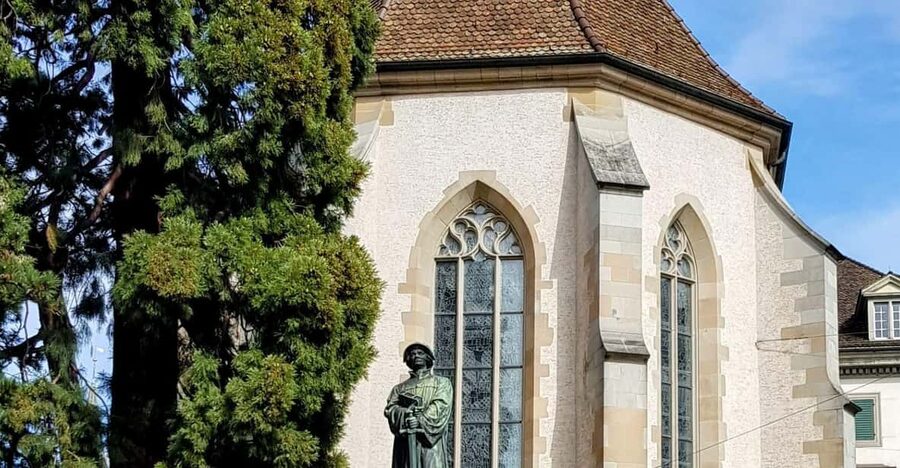
You’ll also stop near the Hans Waldmann Statue (noted with Hermann Haller, 1937). For a Reformation tour, this kind of civic figure matters because reform doesn’t happen in a vacuum. It happens inside power structures, and those structures often include leaders who can support change, resist it, or reshape it.
This stop is about adding texture. If you only focus on religious debate, the story feels incomplete. Zurich’s reforming movement is also political and civic, and the tour uses points like this to keep you from oversimplifying what happened.
Wasserkirche and Grossmünster: two major church identities
Next you’ll visit Wasserkirche for about 15 minutes and then Grossmünster for about 15 minutes. The tour makes room for both, which is great because these churches represent different parts of Zurich’s church identity.
The big caution: the itinerary notes that Grossmünster tower access is not included. So if your ideal outcome is climbing for views and maximizing photo angles from the tower, you’ll need to plan that separately.
Still, inside-or-outside time at both churches can be very satisfying when a guide gives you the right context. The value here is interpretive. You learn how the buildings relate to the Reformation world you’ve been building in your head during earlier stops.
Ehgraben and final storytelling finish back at Heiristeg
The route includes Ehgraben (with about a 5-minute visit) and several additional short guided segments, then returns you to Heiristeg.
These last stops are where I think a good guide earns their keep. The story needs to land. You’re not just collecting landmarks, you’re understanding a movement and what it means when you walk out into modern Zurich afterward. The closing moments are designed to tie together why the Reformation became associated with Zurich in the first place and what you can still sense today.
What you’ll actually learn (and why it sticks)
This tour’s emphasis is the Reformation story through Zwingli’s footsteps, and that focus is what makes it stick for a lot of people. When the movement is tied to street corners, river views, and specific churches, it becomes easier to remember.
There’s also a strong storytelling element. The experience is described as full of legends and anecdotes, and that matches how you’ll likely experience it in real life: you don’t just hear facts, you hear human moments, arguments, and consequences.
One more detail that I think helps: the guide uses short video clips to provide historical background. That’s useful if you learn best when you can see context alongside spoken explanation. It also breaks the “only walking and talking” rhythm, which can be a relief on a dense 2.5-hour route.
The guide quality is the real differentiator
The tour is led by an accredited Fraumünster guide, and the experience is strongly associated with the guide name Bruno. In the way the tour is described, the guide brings extensive knowledge and entertaining stories, and you’ll likely notice the difference in how information is delivered.
From what you’re told, Bruno is also attentive, personable, and good at explaining. That kind of clarity matters, especially for something as layered as the Reformation, where it’s easy for tours to get stuck in names, dates, and theological details.
Here’s what you should expect from a high-quality guide on this topic:
- Clear connections between place and event
- Enough background to understand why Zurich mattered
- Room for your questions, since it’s a private group format
- A pace that keeps history moving instead of freezing into a classroom
Price and value: is $194 per person fair?
At $194 per person for a 2.5-hour private group with included admission to Fraumünster, I look at value in a few buckets.
First: time. Two and a half hours is long enough to cover meaningful ground in the Old Town, but short enough that you won’t feel trapped in a half-day commitment.
Second: inclusions. Entrance to Fraumünster is included. Add in the accredited guide component and the structured route through multiple significant churches and historic sites, and the cost starts to make sense. You’re paying for interpretation and access, not only for walking.
Third: focus. This tour is not trying to be “all of Zurich.” It’s a narrow, high-interest theme: Zurich, time travel, and the Reformation. That specialization often leads to a better learning experience than generic highlights.
If you’re traveling as a small group and want a guided narrative that actually changes how you see Zurich, this price can feel reasonable. If you just want casual city views and minimal history, you might prefer a cheaper, lighter Old Town stroll.
Who this tour is best for
This is a strong match if you:
- Like history that explains cause and effect
- Want the Reformation story tied to real places in Zurich
- Enjoy church history when it’s connected to civic life
- Prefer a private group experience with clear guidance
It may be less ideal if you:
- Need a wheelchair-accessible route (the tour is listed as not suitable for wheelchair users)
- Want mostly free time and minimal structured stops
- Prefer a general overview of Zurich rather than one focused theme
A quick reality check before you book
One possible drawback is that the tour is history-heavy and walking-based. It’s not a quick “see the sights and leave.” You’ll get the most out of it if you’re willing to listen closely and accept that you’re learning as you go.
Also, not every church-related feature is included. Grossmünster tower access is not part of the tour, so you’ll want to plan any tower views separately if they’re a must for you.
Should you book Zurich a journey through time, history and the Reformation?
If your goal is to understand why Zurich became a Reformation center, this tour is an efficient way to do it. The route links Roman-era presence, civic points, and key churches into one story, and the Fraumünster interior visit with included admission is a major part of the payoff.
Book it if you want a guide who can keep the story moving and make the city feel like more than architecture. Skip it if you’re looking for a relaxed, low-effort highlight tour or if walking time and church-focused content will annoy you.
If you like learning through place, you’ll likely come away with Zurich in a new light. And you’ll probably look at the Old Town a little differently after you hear how Zwingli’s Zurich worked, day to day.
FAQ
Where does the tour start?
The meeting point is at the corner of Uraniastrasse 1 / Heiristeg. You can also meet at Zurich main station by prior arrangement.
How long is the tour?
The duration is 2.5 hours.
What is included in the ticket price?
Fraumünster admission is included, and the tour also includes guided visits and background information on Zurich’s Reformation. Grossmünster and Wasserkirche are included for visits, but Grossmünster tower access is not included.
What languages is the tour offered in?
The tour is offered in German and English.
Is it a group tour or private tour?
It’s a private group.
What are some key places on the route?
The itinerary includes Lindenhof, Archäologisches Fenster, Rathausbrücke, the Roman Heater System, Church of St. Peter, Fraumünster, Wasserkirche, and Grossmünster, plus additional short guided stops.
Is the Grossmünster tower included?
No. Grossmünster tower access is not included.
Is the tour wheelchair accessible?
No, it is not suitable for wheelchair users.
Recently reviewed around Zurich
- Zurich Trendy Artisan & Culinary Encounters★ 5.0 · 6 reviews
- Zurich: Virtual Reality Arena★ 3.8 · 6 reviews
- Zurich: Private tour to Interlaken, Grindelwald & Jungfrau★ 5.0 · 3 reviews
- Zurich: Private Day Trip to Jungfrau and Lauterbrunnen★ 5.0 · 7 reviews
- Zurich’s best-kept secret: the hidden world of mushrooms!★ 5.0 · 7 reviews
- Zurich : Private Custom Walking Tour With a Local Guide★ 3.7 · 8 reviews
- Zurich Premium Fitness Pass★ 3.0 · 3 reviews
- Zurich: Private custom tour with a local guide★ 3.5 · 8 reviews
Historical Tours, side by side.

Private Exclusive History Tour with a Local Expert
Read our review →Lists this tour appears in