
Reviewed · LUCERNE CITY TOURS
Lucerne: Classic City Walking Tour
Lucerne is one of those cities where you can see centuries of Switzerland in a short walk, as long as someone points at the right details. This classic city walking tour connects the big landmarks, like the Lion Monument, with smaller stops that make the old town feel real. I especially like the way it uses art and architecture to explain the past, from the Danse Macabre paintings to the stories tied to the Musegg Wall.
You’ll cover a lot in about two hours, with a local guide leading you from place to place, including moments where you can step inside (when open). The main drawback to plan around is that a couple of the most interesting interiors depend on timing and season, like Ritter’s Palace and the Musegg Wall towers.
Key takeaways before you lace up your shoes
- Lion Monument: not just a statue, it’s a specific memorial tied to Swiss mercenaries and the French Revolution.
- Musegg Wall towers: Schirmerturm and Zeitturm plus clockwork details from the late Middle Ages.
- Pilatus spring water at the wine market: you get a practical explanation for why Lucerne locals trust this water source.
- Chapel Bridge and old churches: the walk threads through historic lanes to Peterskapelle and the Jesuit Church.
- Ritter’s Palace courtyard: stone carvings linked to Hans von Trient, plus Renaissance loggias.
- Dance of Death (Danse Macabre): seven paintings presented with context, created around 1610 by Jakob von Wyl.
The smart pace: a 2-hour Lucerne walk that actually fits your day
At two hours, this is the kind of guided old-town experience that works whether you are doing Lucerne as a quick stop or staying long enough to get bored of your own photos. The route is built to keep moving, but not so fast that you miss what you’re looking at.
The tour is private group, and pickup is included from your hotel in Lucerne. That matters because Lucerne’s center is walkable, but you might still need help getting positioned for the historic lanes. The day you go, your guide will welcome you at the reception, brief you on the route using a city map, and then start you toward the first set of sights.
A practical note: the tour runs in all weather, so plan like this is Switzerland, because it is. Bring rain protection, and wear shoes you can walk on for a full couple of hours without thinking about it.
More Lucerne city tours:
- Lucerne: Private Walking Tour with a Local Guide
★ 4.6 · 450 reviews - Lucerne Walking & Boat Tour: The Best Swiss Experience
★ 4.5 · 417 reviews - Lucerne: Guided Walking Tour with an Official Guide
★ 4.7 · 321 reviews
Start at the Bourbaki Museum, then let Lucerne explain itself
The tour begins at the Bourbaki Museum, with your guide providing historical context right from the start. I like this choice because it sets a tone. You’re not walking around staring at pretty buildings first, you’re learning how Lucerne’s story fits into bigger events.
From there, the pacing naturally leads you into the more famous memorials and fortifications. In other words, by the time you reach the Lion Monument, you already understand what the guide means by history living in stone and street layout.
If you’re the type who gets restless when a tour starts too slowly, you’ll still feel like you are progressing. The opening museum stop is short enough to keep energy high, but it gives you something to hang the rest of the walk on.
Lion Monument: why a dying lion is so central to Swiss memory
The Lion Monument is the kind of stop people think they know, until a guide explains what it is actually commemorating. This memorial represents a dying lion, and it commemorates fallen Swiss mercenaries who died in the storm of the Royal Palace during the turmoil of the French Revolution.
That background changes how you read the sculpture. Instead of treating it as an emotional landmark, you start to see it as a hard, specific piece of memory tied to a particular event. The tour format helps here, because you’re learning the context immediately before or right around the viewing time.
If you care about symbolism and political history, you will likely find the guide’s framing makes the Lion Monument more than a must-see photo. It turns it into a story you can carry with you as the walk moves from the memorial into the city’s older defensive areas.
Musegg Wall towers: Schirmerturm and Zeitturm with late medieval clockwork
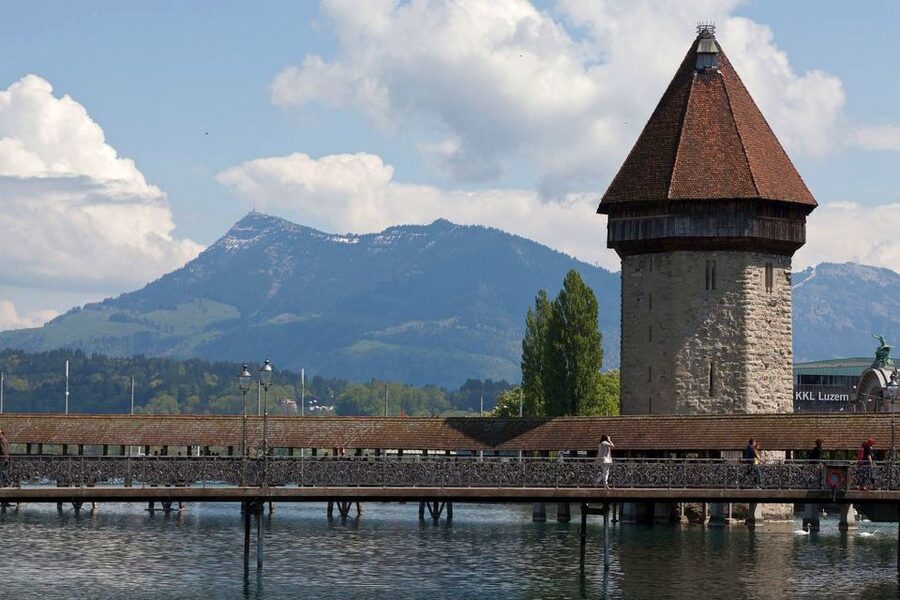
About ten minutes of walking takes you to the Musegg Wall hill, where you reach the still preserved outer city fortification from medieval Lucerne. The experience isn’t only scenic. Your guide points you toward the Schirmerturm and Zeitturm, then talks about what these structures meant for a city that had to protect itself and negotiate power over time.
Zeitturm in particular is highlighted for its clockwork from the late Middle Ages. This is one of those details that’s easy to miss if you’re just sightseeing. With a guide, you learn what to look for and why the clock and towers mattered beyond timekeeping.
You’ll also hear interesting facts about Swiss history, including wars of liberation, territorial expansion policy, and armed neutrality that still applies today. I like how this tour ties local landmarks to the idea that Switzerland’s approach to security is not random. It’s a long conversation across centuries.
Seasonal heads up: between November and April the Musegg Wall towers are closed and cannot be visited from the inside. You can still enjoy the exterior context, but if your ideal version of this tour includes tower access, plan for warmer months.
A few more Lucerne trips worth comparing
- Lucerne: Walking and Boat Tour with Cheese & Wine Tasting
★ 4.7 · 120 reviews - Exclusive Private Lucerne Walking Tour with Local Guide 3 Hours
★ 5.0 · 80 reviews - Lucerne: Private Walking Tour with a Local Guide
★ 4.2 · 34 reviews - 1.5-Hour Small-Group Nightwatchman Walk in Medieval Lucerne
★ 4.5 · 34 reviews
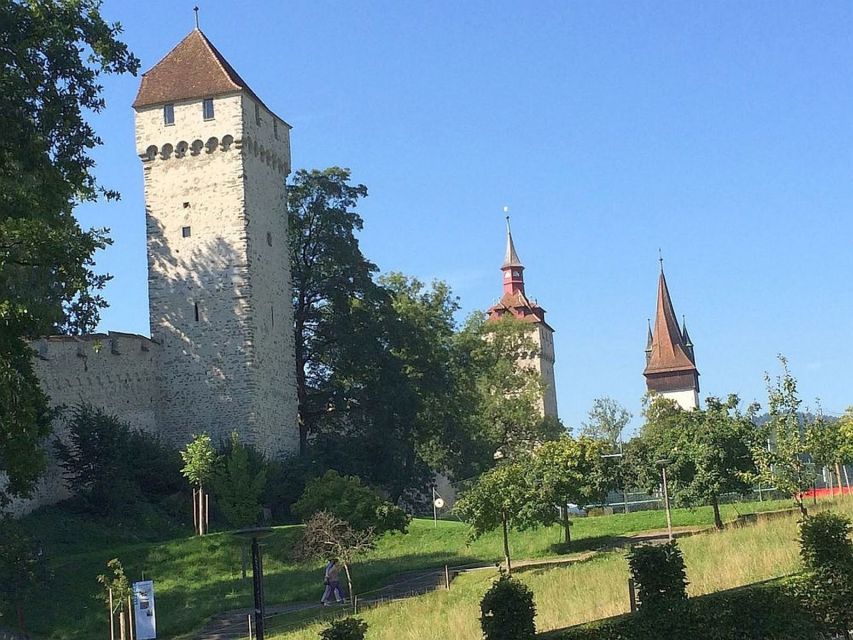
Historic center lanes: stately homes, bridges, fountains, and mural corners
Once you move into the historic center, the tour shifts into “look closely” mode. You walk through alleys where stately homes sit side by side with small details like fountains and mural paintings. This part of the route is less about one single headline sight and more about learning how Lucerne’s old town is built.
I like these segments because they make your self-guided time after the tour better. When you understand why an alley bends where it does, or why certain spaces got decorated, the city starts to feel navigable instead of chaotic.
You’ll also get a natural transition toward the Chapel Bridge area, with your guide guiding you around the most meaningful turns instead of dumping you in front of the busiest postcard spot and calling it a day.
Wine market, Pilatus spring water, and the oldest fountain you can taste
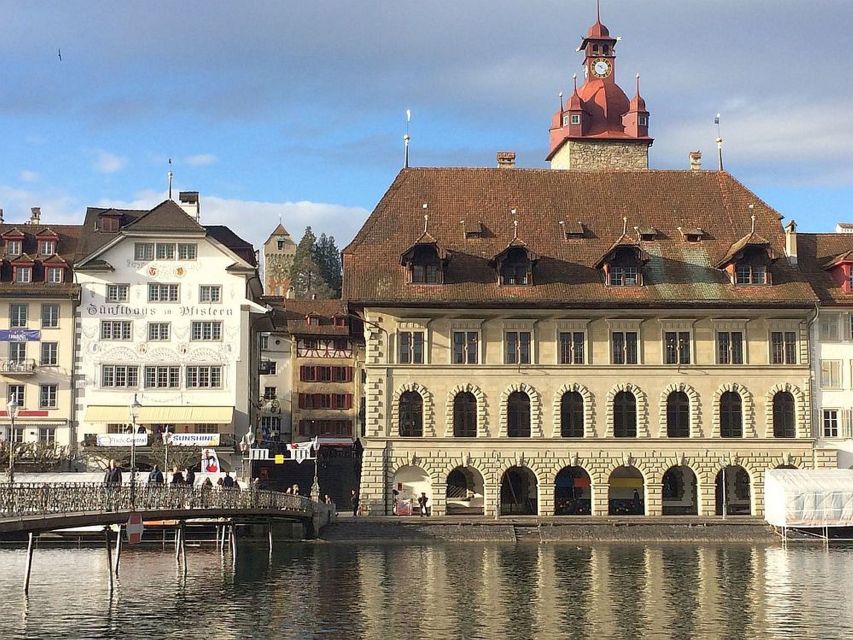
In the historic center, there’s a stop at the wine market, where you’ll find the city’s oldest fountain. The tour includes drinking pure Pilatus spring water, with your guide explaining why the old town well flows the best water in Lucerne.
This is one of those experiences that sounds simple, but it’s a great example of why guided walks beat random wandering. When a local guide points out a specific water source and tells you what makes it special, you notice things you would otherwise skip.
If you’ve ever been in a city where fountains exist but nobody seems to care about them, this is the opposite. You’ll leave thinking about water and daily life in old Lucerne, not just monuments and bridges.
Furrengasse to Peterskapelle: where Lucerne starts to feel medieval
Next comes a stroll through Furrengasse to Peterskapelle, the first church in Lucerne dating back to the city’s founding in the 12th century. The walk from place to place is short, but the shift is big. You’re going from main sights into a quieter lane rhythm that feels like the city used to be.
Peterskapelle is an especially meaningful stop because it anchors the walk in an early timeframe. Your guide’s explanation makes it less like a “pretty old church” and more like proof of how long Lucerne has been shaped by religion, administration, and community life.
If you’re traveling with people who prefer concrete history rather than general ambiance, this is the kind of stop that keeps them engaged.
Chapel Bridge and the other river side: iconic, but worth the explanation
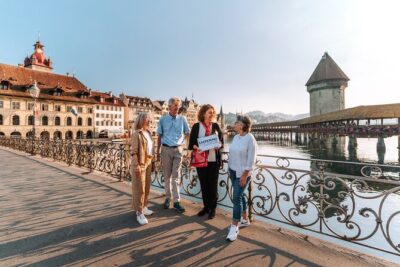
The Chapel Bridge is world-famous, and yes, you’ll see it. But what makes it satisfying on a guided tour is the in-between parts: the approach and the context.
You cross to the other river side of the historic center, and the guide’s narration helps you understand why this bridge is more than a landmark. It’s part of Lucerne’s identity and urban design, linking neighborhoods and shaping movement through the old town.
Plan for crowds. You are in the most photogenic zone, but with a guide you won’t feel stuck waiting in the exact same line for the exact same shot. You’ll likely spend more time learning and less time standing.
Jesuit Church interior: first baroque church in Switzerland (when open)
After Chapel Bridge, you visit the Jesuit Church. This is presented as the first baroque church in Switzerland, and you get a chance to visit the inside, except during church services.
I like this because it adds variety. Up to this point, you’ve been surrounded by exterior architecture and city layout. A church interior gives you a different sensory read: light, structure, and the way baroque design communicates power and belief.
If the church is in service when you arrive, you might only get an exterior look, so don’t build your whole emotional experience on entering. Still, it’s a strong stop when access is possible.
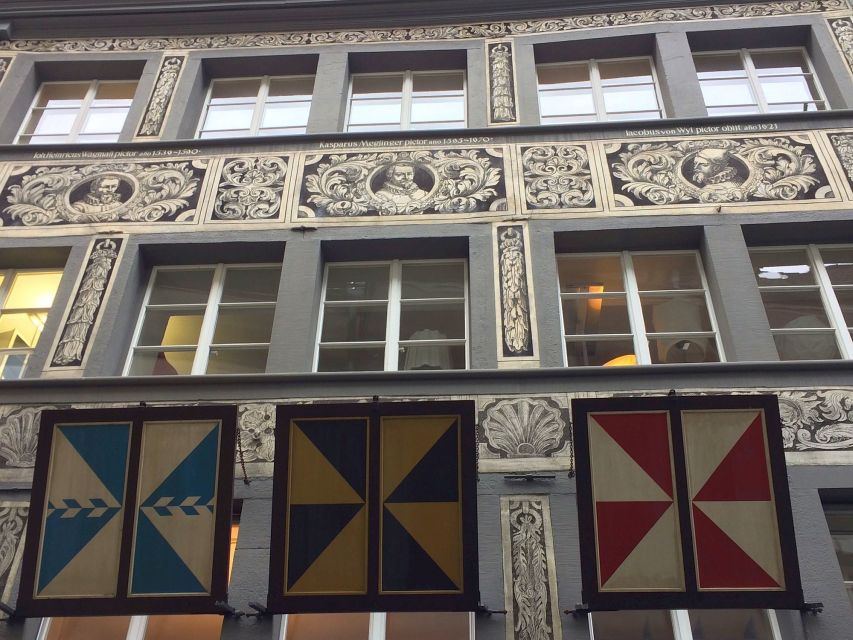
Ritter’s Palace and Renaissance palazzos: stonework, loggias, and Hans von Trient
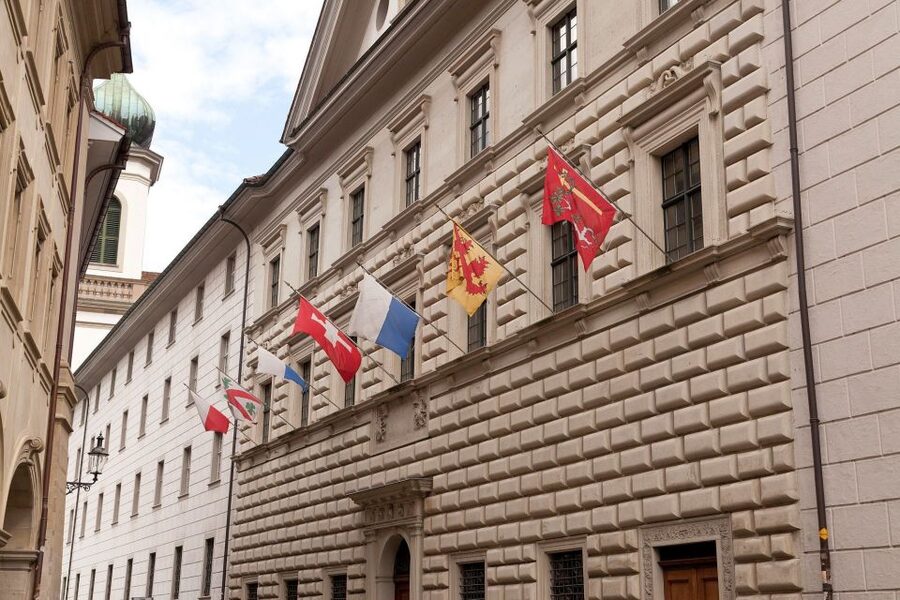
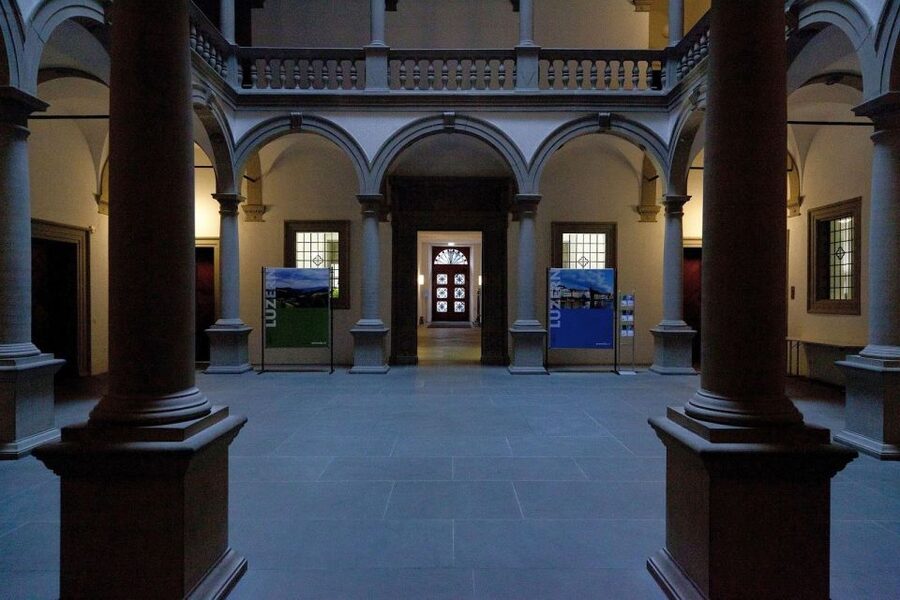
One of the most impressive stops is the cantonal government building area, where you reach the former Ritter’s Palace and some of the city’s most imposing Renaissance palazzos. Your guide shows you the courtyard with loggias and points out beautiful stone carvings tied to the unfortunate stonemason Hans von Trient.
This is where the tour can surprise you. It’s not just big buildings. It’s specific human details carved into the stone, with a story attached. That kind of detail is exactly what makes you remember a city even after the photos fade.
Important timing issue: on Saturdays, Sundays, Holidays, and on special events, Ritter’s Palace is closed and you cannot visit it from the inside. You can still see where it sits and appreciate the setting, but the inside courtyard experience may not be available on those days.
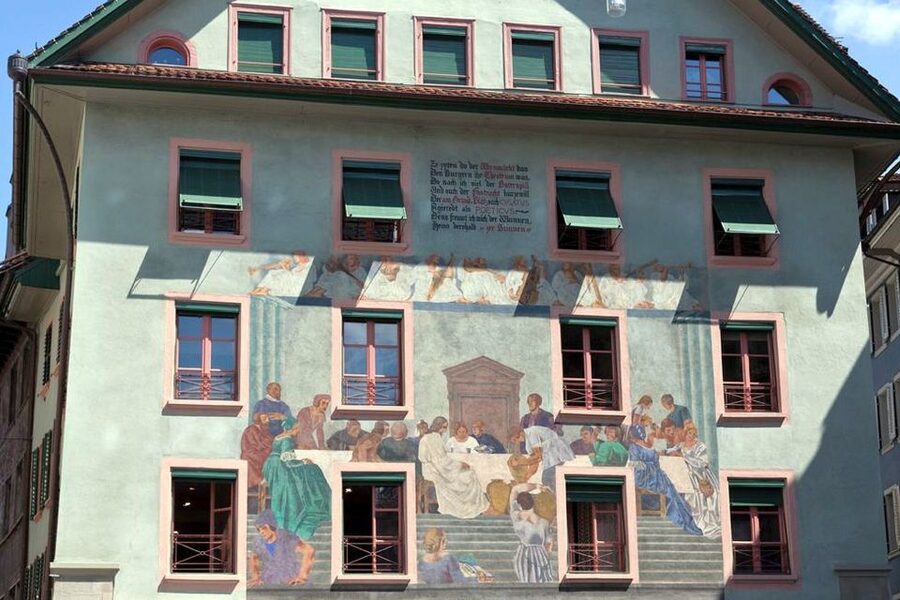
Danse Macabre (Dance of Death): seven paintings made legible
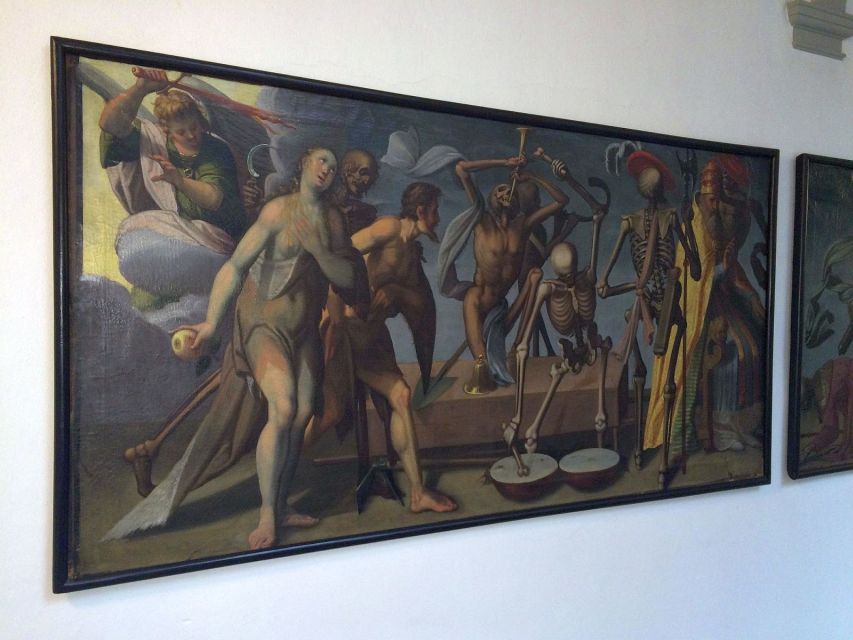
Near the end, you get the presentation of the seven paintings showing Danse Macabre, also called Dance of Death. The tour notes that this famous Renaissance artwork was created around 1610 by Jakob von Wyl.
A guide’s job here is to make the art readable. Without context, Danse Macabre can feel like a grim curiosity. With context, it becomes a window into what people feared, what they thought about mortality, and how art was used to communicate moral lessons.
I like ending this way because it’s memorable. You don’t leave only with landmarks. You leave with an image and a meaning you can carry into your next stop in Switzerland.
Price and value: what you get for $323 per person
At $323 per person for a two-hour private guided walk, the price might make you pause. Here’s how I think about value for this particular tour.
You’re paying for a local guide plus a route that hits multiple “Lucerne essentials” in a tight time window. You also get pickup from hotels in Lucerne, which reduces logistical friction on your first day. And the tour includes access elements that can matter: you may be able to visit inside the Jesuit Church (unless in service) and inside Ritter’s Palace depending on day and closures.
The big value question is whether your travel dates line up with interior access. If you go on a weekend or holiday, Ritter’s Palace inside visit may be off the table. If you go between November and April, the Musegg Wall towers are closed from the inside. If you do visit during better-access months and weekdays, this tour feels more like a full package rather than a highlights walk.
It’s also a strong fit if you like history explanations tied to objects, not just sweeping generalities. The tour focuses on memorials, fortifications, and specific artworks, so the guide’s commentary is doing real work.
The guide factor: what to watch for when meeting at the hotel
The guided experience hinges on how smoothly your guide leads the group at the start and how well they handle attention for your particular group.
One review I’ve heard patterns from is that guides are often praised for being informative and offering original, meaning-heavy insights. Another point to keep in mind is that good tour outcomes start with a clean meetup. If your guide is late or doesn’t spot you quickly, the start can feel awkward.
My practical advice: arrive a little early at your hotel reception, and if you do not see your guide, ask hotel staff right away. Once you’re walking, the tour tends to settle into a better rhythm, and you’ll get the history and route flow you paid for.
In the best case, you’ll get a guide who makes Lucerne’s past feel relevant, down to small details that suddenly make sense.
Who this tour suits, and who might want something different
This tour is a great match for you if you want a guided Lucerne walk that mixes major sights with specific context. It’s especially good for first-time visitors who want to learn what matters without spending the whole day decoding.
I’d also recommend it if you like:
- memorials and what they meant at the time
- fortifications and historical city defense logic
- art explanations that connect to people and mortality themes
You might choose a different option if you:
- hate any walking during weather changes, even with rain gear
- need guaranteed interior access every stop, regardless of day or season
- prefer long time in one place over moving through several key sites
Should you book the Lucerne Classic City Walking Tour?
If you’re in Lucerne for a short stay and you want the city to make sense fast, I think this is a very good booking. You get a smart, two-hour route that touches Lion Monument, Musegg Wall towers, Chapel Bridge, churches, Renaissance architecture, and the Danse Macabre art presentation, all with local-guided context.
Before you click confirm, check your travel day against Ritter’s Palace closure, and match your month with Musegg Wall tower access. If your schedule lines up, this feels like a high-value way to see Lucerne with meaning, not just postcards.
FAQ
FAQ
How long is the Lucerne Classic City Walking Tour?
The tour lasts 2 hours.
Where does the guide meet you?
The local guide welcomes you at your hotel reception in Lucerne before briefing you on the route.
Is hotel pickup included?
Yes, pickup is included from all hotels in Lucerne.
Do I need public transport to join the old town part of the walk?
You may require a bus ticket from your hotel to the old town and back. If you stay in a Lucerne hotel, you receive a free public transport ticket for the entire stay at the reception.
What languages is the tour offered in?
The tour is offered in English and German.
Is the tour really in all weather?
Yes, it is conducted in all weather conditions, so dress accordingly.
Can I visit Ritter’s Palace inside on every day?
No. On Saturdays, Sundays, Holidays, and on special events, Ritter’s Palace is closed and cannot be visited from the inside.
Are the Musegg Wall towers always accessible from the inside?
No. Between November and April, the Towers of the Musegg Wall are closed and cannot be visited from the inside.
Recently reviewed around Lucerne
- Zurich: Day trip to Lucerne and Bürgenstock★ 3.7 · 12 reviews
- Zurich: Adventure to Lucerne & Pilatus Gold or Silver tour★ 4.8 · 8 reviews
- Private Transfer: Lucerne to Zurich Airport ZRH by Business Car★ 5.0 · 11 reviews
- Private Transfer: Lucerne to Zurich Airport ZRH by Luxury Van★ 4.5 · 6 reviews
- Weggis Vitznau Foxtrail Helios★ 4.5 · 8 reviews
- The Lives and Legends of Lucerne: A Self-Guided Audio Tour★ 5.0 · 6 reviews
- Natural Wonders of Switzerland from Lucerne (1 Day Private Tour)★ 5.0 · 21 reviews
- Touristic highlights of Lucerne on a Private half day tour with a local★ 4.0 · 5 reviews
Lucerne City Tours, side by side.
Lucerne Walking & Boat Tour: The Best Swiss Experience
Read our review →

Walking and Boat Tour with Cheese & Wine Tasting
Read our review →
Lists this tour appears in