
Reviewed · LUCERNE CITY TOURS
Private 1.5-Hour Nightwatchman Walk in Medieval Lucerne
A nightwatchman tour in medieval Lucerne is interesting because it turns the Old Town into a guided performance, complete with costume, a few props, and a projector that makes the past feel close. I especially like the way the guide uses the Martiniplan (the 1597 city map) to help you orient yourself, and how the medieval legends and grim city stories connect famous landmarks to daily life.
You get a lot for 1 to 1.5 hours, but plan for two real-world considerations. First, the tour notes that admission tickets are not included for some stops, so you may need to pay separately if you want to enter specific interiors. Second, you are walking at night in winter or rain, so wear grippy shoes and bring proper layers.
Key highlights to look for on this nightwatchman walk
- Fire horn start and character storytelling that sets the mood right away
- Martiniplan (1597) projections that show you which buildings still match the map
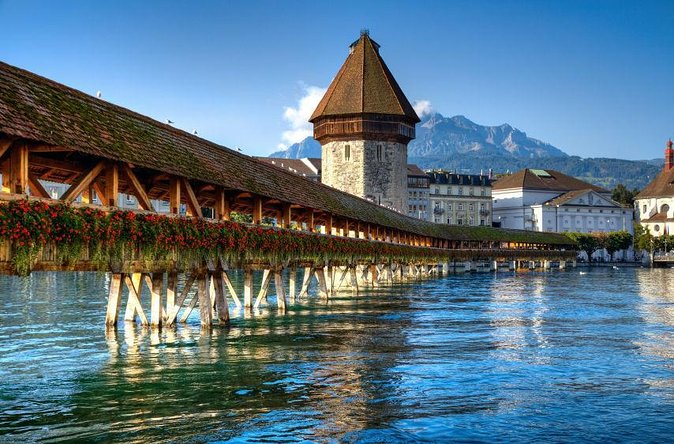
- Chapel Bridge and the Water Tower timeline (Chapel Bridge dating to 1365, Water Tower from the late 13th century)
- City symbols and measurements, including Lucerne Foot and Elle
- Dark Middle Ages themes like the torture chamber stories and medieval law and punishment methods
- Packed sights in a short walk, with about ten minutes at each stop
Medieval Lucerne at night, guided like a role, not a lecture
This is not a museum-style history lesson. It is a private walking tour where you follow a medievally dressed local guide through Lucerne’s Old Town, with story beats timed to the street scenes around you. You are still outdoors, but the projector helps the guide “switch on” medieval context when you need it.
What makes it feel different is the pacing. You do not just see one or two highlights. You move stop to stop at a steady rhythm, so the old city becomes a chain of connected clues, from early churches to bridges, town hall details, pharmacies, and the dramatic Dance of Death imagery.
More Lucerne city tours:
- Lucerne: Private Walking Tour with a Local Guide
★ 4.6 · 450 reviews - Lucerne Walking & Boat Tour: The Best Swiss Experience
★ 4.5 · 417 reviews - Lucerne: Guided Walking Tour with an Official Guide
★ 4.7 · 321 reviews
How the 1.5-hour route really works, from Rosengart Platz to the finish
You start at Rosengart Platz, 6004 Luzern, and the tour ends back at the meeting point. The time on the ground is designed to fit into roughly 1 hour to 1 hour 30 minutes, depending on the season, and the itinerary is structured around short segments at each location.
Because it is a private tour, the guide can slow down for your questions and keep the nightwatchman rhythm going with your group. Also, it runs in all weather conditions, so expect the same plan on a drizzle night or a clear evening, not a last-minute shuffle.
If you are visiting in the winter (November to March), the duration tightens to 1 hour. That makes it great as a night add-on, but you should still come with comfortable walking shoes and patience for shorter time at each stop.
Stop 1, Peterskapelle: the Martiniplan map projection moment
The tour starts at Peterskapelle area with the guide beginning in character, using a fire horn and an invocation pray. Then you get the “how Lucerne used to function” framework for the whole evening, including what life could be like for the nightwatchman role in the Middle Ages.
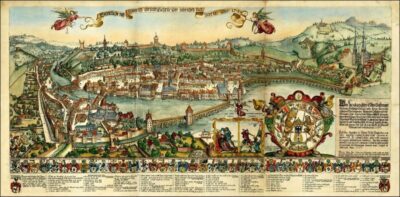
This stop is where the tour earns its repeatability. With the help of a projector, you get a detailed look at the Martiniplan, Lucerne’s first city map, dating from 1597. The key value for you is practical: you can trace routes on the map and see that many buildings on it are still there today, which makes the rest of the walk feel less like random sightseeing.
From there, the guide points out St. Peter’s Chapel, described as the first church in town dating back to the 12th century. You also learn about a “first private stone house of Lucerne,” and why the expression stone rich exists.
Ticket note: Peterskapelle lists admission not included, so if you plan to go inside (if access is available that night), budget for separate entry.
Stop 2, Chapel Bridge and the Water Tower: built in different eras, linked by stories
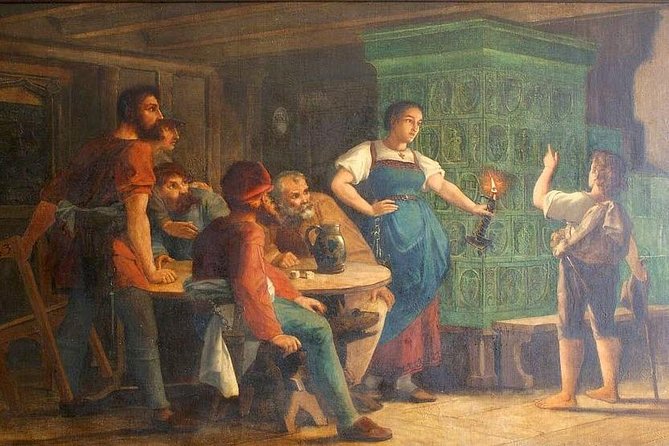
Next you head toward Chapel Bridge and get a useful timeline lesson you might not notice on your own. The guide explains that the Water Tower predates Chapel Bridge, built in the late 13th century, while Chapel Bridge dates to 1365.
You also get a more intense look at what was kept inside the Water Tower. The guide shows pictures of the interior and talks about a torture chamber, a dungeon, and a secret room. If you like history with edge, this is one of the stops that feels most like a story being told right where the story happened.
You will also learn why Chapel Bridge got its name. The details may not be visible from street level, so this is a good place to listen closely, not just glance at the view.
Ticket note: Chapel Bridge and this leg are marked as free in the tour flow.
A few more Lucerne trips worth comparing
- Lucerne: Walking and Boat Tour with Cheese & Wine Tasting
★ 4.7 · 120 reviews - Exclusive Private Lucerne Walking Tour with Local Guide 3 Hours
★ 5.0 · 80 reviews - Lucerne: Private Walking Tour with a Local Guide
★ 4.2 · 34 reviews - 1.5-Hour Small-Group Nightwatchman Walk in Medieval Lucerne
★ 4.5 · 34 reviews
Stop 3, Furrengasse and Kapellplatz: the Republic of Lucerne and a haunting name
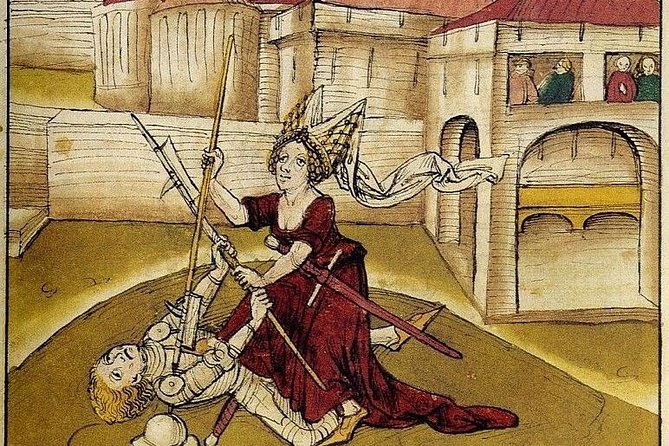
When you turn toward Kapellplatz, the guide shifts from architecture to folklore and daily life. You hear about life in the blooming Republic of Lucerne, and you walk the Furrengasse with two strong story themes: the Ghost and the Toggeli, described as an incubus sometimes associated with the idea of a love robber.
I like this stop because it breaks the “facts only” pattern. It also helps you understand that medieval Lucerne had its own way of explaining fear, desire, and rumor, and those ideas still show up in how places are named and remembered.
Ticket note: This portion is listed as free.
Practical caution: some of the material here is supernatural-flavored and some is dark elsewhere on the route, so if you are bringing younger kids, consider whether they will enjoy eerie legends or prefer lighter stops.
Stops 4 to 6, from Kornmarkt to Weinmarkt: measurements, town hall quirks, and a broken heart line
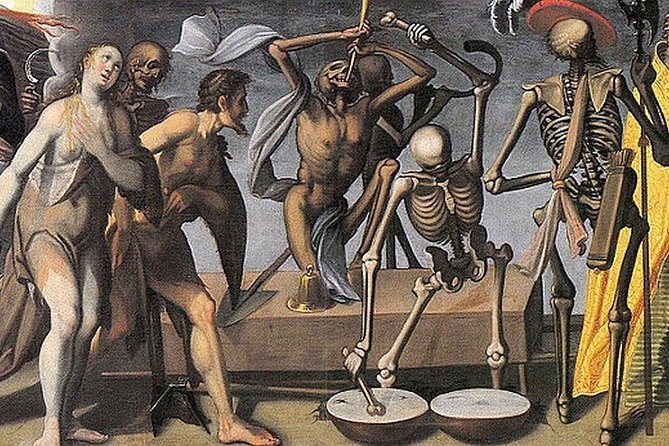
You arrive at Kornmarkt, the Town Hall Square, and this is where the tour rewards people who like small details. You learn about the Renaissance town hall and its tower, including the clock described as having no minute hand. You also hear the story of the Giant of Reiden and get introduced to Lucerne’s official measures, the Lucerne Foot and Elle.
That measurement detail matters more than it sounds. It is a reminder that cities used physical standards to keep trade fair and everyday life organized. When you connect that to what you see on a square like Kornmarkt, the buildings stop being scenery and start behaving like infrastructure.
Then comes Brandgässli, an alley tied to the Riot of Lucerne, plus the former fish market, known today as the wine market. This stop is short, but it gives you a street-level sense of how the economy shifted over time and why markets still shape city life.
Finally you hit Weinmarkt, where you see old guest house signs and frescoes on buildings. The guide also brings in Renward Cysat, with a pharmacy house mention and a Latin sentence you can remember: Amor medicabillis nullis herbis, explained as meaning there is no cure for a broken heart. If you enjoy quirky wisdom carved into real facades, this is a fun payoff.
Ticket notes: Kornmarkt lists admission not included, while Brandgässli and Weinmarkt are listed as free on the tour flow. As always, if you are hoping to enter an interior space rather than just view it from outside, check what is included for that particular moment.
Stop 7, Im Zöpfli: medieval law and punishment, projected in motion
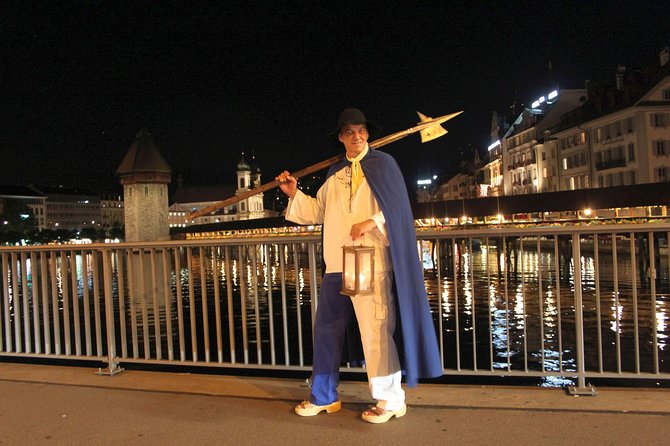
At Im Zöpfli, right by the river square, the tour turns toward law and order. The guide projects images about methods of prosecution, interrogation, and corporal punishment in medieval Lucerne.
I like that the guide uses projections here, because the topic is hard to “read” off a street corner. You are not just hearing about it. You are seeing structured examples while the city location stays close in your peripheral vision.
This is also where you may want to adjust expectations. If you want purely uplifting medieval charm, this portion may feel heavy. But if you like the full picture, including how order was enforced, it adds real texture to the walk.
Ticket note: This stop is listed as free.
Stop 8, Reussbrücke and the river defenses: Spreuerbruecke, Needle Dam, Musegg Wall
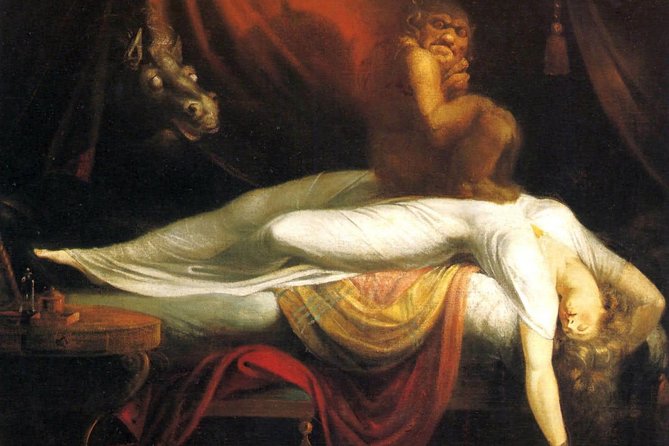
Crossing toward the river, you pass Reussbrücke and look for several connected water-linked features. The guide points out the Spreuerbruecke (Mill Bridge), the Needle Dam, and parts of the Musegg Wall.
This is a good “breather stop” in the itinerary because the river gives your eyes somewhere to rest, and the city wall pieces help you understand why Lucerne developed where it did. You start seeing the Old Town as a system, not a collection of landmarks.
Ticket note: This segment is listed as free.
Stop 9, Alte Suidtersche Apotheke: the pharmacy window that looks like a relic
Next you reach Alte Suidtersche Apotheke, described as having a medieval pharmacy window that is truly striking. This is the kind of stop where a guide earns their fee by slowing you down for what your eyes might skip at night.
The nightwatchman framing makes sense here. Medieval medicine, commerce, and superstition mixed in ways that feel strange today, and a pharmacy window is a physical clue that the city treated health and trade as part of the same fabric.
Ticket note: This stop lists admission not included.
Stop 10, Ritterscher Palace: Lux Ritter, Hans von Trient, and the Dance of Death projections
This is one of the most dramatic parts of the walk. At Ritterscher Palace Lucerne, the guide introduces “Guardian Demons” and you stop at the legendary house of Lux Ritter. You hear why the first two floors look different than the third, and you get the story of Hans von Trient, described as an unlucky stonemason.
Then comes the showpiece: the Dance of Death presentation, specifically seven paintings. The guide projects the images on a house wall and explains details as you look on in the night air.
If you have a soft spot for moral stories, funerary art, or the way cities used public imagery to communicate fear and balance, this will likely be a highlight. If you dislike grim themes, at least you will know this stop is coming before you reach it.
Ticket note: Admission is listed as not included for this stop.
Passing the Jesuits Church, then crossing Chapel Bridge again
As you continue, you pass the Church of the Jesuits, noted as the first baroque building in Switzerland dating back to 1677. It is not just a random detour. It shows how Lucerne kept evolving after the medieval era, so your night tour does not end in the past without context.
Then you cross Chapel Bridge again, ending at the meeting point. You see the paintings and learn why the bridge is built diagonally over the river, a detail that makes the structure feel more intentional than purely decorative.
Ticket note: This final Chapel Bridge segment is listed as free.
What I think works best, especially if you like details
The biggest strength here is how the guide connects tiny observations to bigger ideas. In English, the guide role is presented with props and a projector, and the stories are paced so you can actually track what you are looking at. Locals in the role, such as guides named Rolf or Ralph, are highlighted in the tour experience as being passionate and clear, and that matters because you are walking at night with limited time at each stop.
I also like the way the tour helps you notice things you would miss on your own. Examples include guild symbols mentioned as something the guide calls out, plus the way measurements and building quirks get explained in context rather than left as trivia.
Price and value: what $165.26 per person buys you
At $165.26 per person, this is not a budget sightseeing walk. The value is in three places:
- Private guide time: You get a medievally dressed local guide tailored to your group, not a loud group script.
- A guided night experience: The nighttime setting changes how you experience details, and the projector helps you connect streets to maps and images.
- A tightly packed itinerary: In about 1 to 1.5 hours, you cover a lot of medieval Lucerne nodes, not just one or two postcard scenes.
If you are traveling solo or as a couple, the price can feel steep compared to shared group tours. But it becomes easier to justify if you want a guide’s attention, you care about medieval street-level detail, or you are visiting in a short window and want an efficient night activity.
Who should book this nightwatchman walk in Lucerne
This tour fits you if you:
- Like history with character, props, and clear storytelling
- Want to understand the Old Town using the Martiniplan map rather than just reading plaques
- Enjoy medieval legends, including darker themes and stories
- Prefer a focused 1-hour to 1.5-hour plan over a long day of museums
It may not be your best match if you hate grim topics like torture chamber references or medieval corporal punishment projections, or if you simply want a light, scenic walk with no story depth.
Should you book this private nightwatchman walk?
I think you should book it if you want an evening in Lucerne that feels more guided and personal than standard sightseeing. The Martiniplan connection plus the projections at multiple stops make it easier to understand the city than a casual night stroll, and the nightwatchman performance keeps the time moving.
Book it with one smart expectation: some stops list admission tickets not included, so decide in advance if you want only the exterior viewing plus projections, or if you plan to pay extra for interiors if offered.
If your priority is structured museum hours, look elsewhere. If your priority is seeing how Lucerne’s medieval streets actually connect, this is a strong choice.
FAQ
How long is the nightwatchman walk?
The tour lasts about 1 hour to 1 hour 30 minutes. During winter months from November to March, the duration is listed as 1 hour.
Is this a private tour?
Yes. It is a private tour/activity, and only your group participates.
Is the tour offered in English?
Yes, the tour is offered in English.
Where do we meet and where does the tour end?
The meeting point is Rosengart Platz, 6004 Luzern, Switzerland. The tour ends back at the same meeting point.
Are admission tickets included for all stops?
No. Some stops note admission tickets not included, including Peterskapelle, Kornmarkt, Alte Suidtersche Apotheke, and Ritterscher Palace. Other stops are listed as admission free.
Does the tour run in bad weather?
Yes. The tour operates in all weather conditions, so dress appropriately for the evening.
Can I cancel for free?
Yes, free cancellation is available. You can cancel up to 24 hours in advance for a full refund.
Recently reviewed around Lucerne
- Zurich: Day trip to Lucerne and Bürgenstock★ 3.7 · 12 reviews
- Zurich: Adventure to Lucerne & Pilatus Gold or Silver tour★ 4.8 · 8 reviews
- Private Transfer: Lucerne to Zurich Airport ZRH by Business Car★ 5.0 · 11 reviews
- Private Transfer: Lucerne to Zurich Airport ZRH by Luxury Van★ 4.5 · 6 reviews
- Weggis Vitznau Foxtrail Helios★ 4.5 · 8 reviews
- Natural Wonders of Switzerland from Lucerne (1 Day Private Tour)★ 5.0 · 21 reviews
- Touristic highlights of Lucerne on a Private half day tour with a local★ 4.0 · 5 reviews
- The Lives and Legends of Lucerne: A Self-Guided Audio Tour★ 5.0 · 6 reviews
Lucerne City Tours, side by side.
Lucerne Walking & Boat Tour: The Best Swiss Experience
Read our review →

Walking and Boat Tour with Cheese & Wine Tasting
Read our review →
Lists this tour appears in